
A Halloween sensory bin gives kids a hands on way to enjoy the season without candy, costumes, or noise. It is simply a container filled with materials your child can dig through, scoop, and explore with their hands. This kind of play works well for younger kids who enjoy touch and texture more than games or crafts.
It also gives older kids a calm activity to fall back on between busier parts of the day. Best of all, a sensory bin can be built in minutes using items you likely already own. Unlike a lot of Halloween activities, this one asks for no candy, no costume, and almost no cleanup.
It also gives you a break from managing noise, since a good bin keeps a child settled for a while. Many parents discover this activity by accident, only to find it becomes a most requested part of the season. If your child still needs a costume, see 35 Halloween Costume Ideas for Kids They’ll Beg to Wear first.
Setting up a good sensory bin takes very little planning once you know what to include. It also does not require anything special, since most of what you need is likely already in a cupboard. A sensory bin also travels well, moving from the kitchen table to a porch depending on the weather. Here is how to build one your child will genuinely want to return to again and again this season.
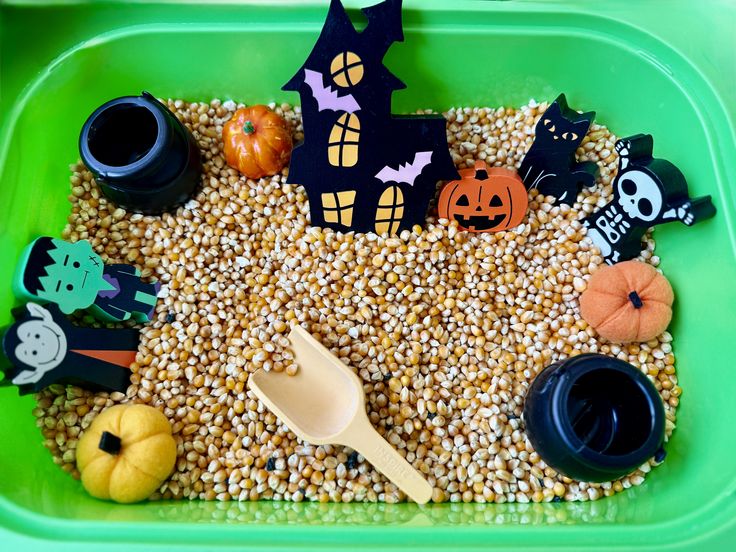
How to Set Up a Halloween Sensory Bin Kids Will Love
Choose a Simple Base Material
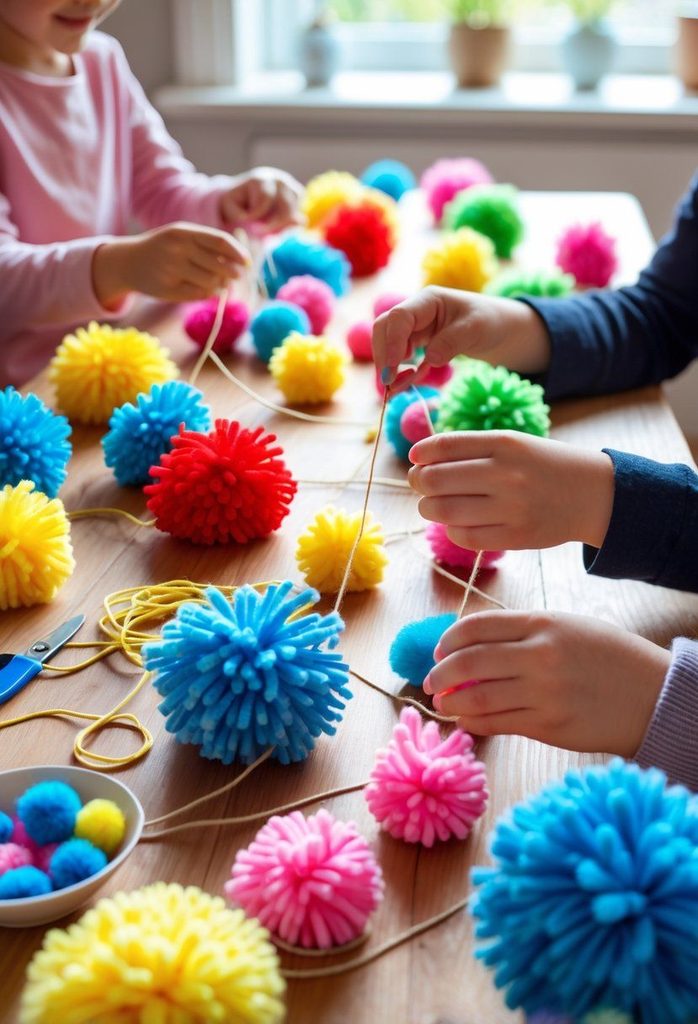
Start with one main filler that your child can scoop, pour, and dig through easily. Dried rice, dried beans, shredded paper, or small pom poms all work well as a base.
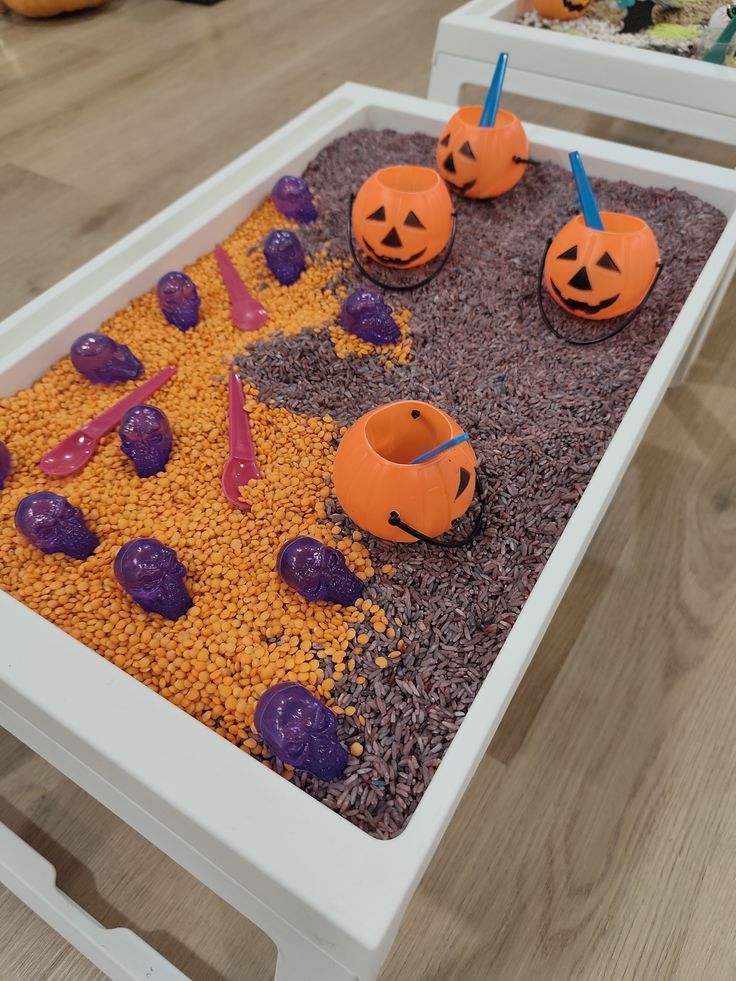
Dye plain rice orange or black with a bit of food coloring for a festive touch. Keep the base material simple, since the smaller items added later will carry most of the Halloween theme.
A large plastic bin or a shallow tray works well to contain the mess during play. If your child has any known sensitivities, test a small amount of the base material on their hands first.
This small step can save you from an unpleasant surprise partway through setup. Buying dried goods in bulk also keeps this activity affordable across several bins over the season.

Pick a Halloween Theme for the Bin
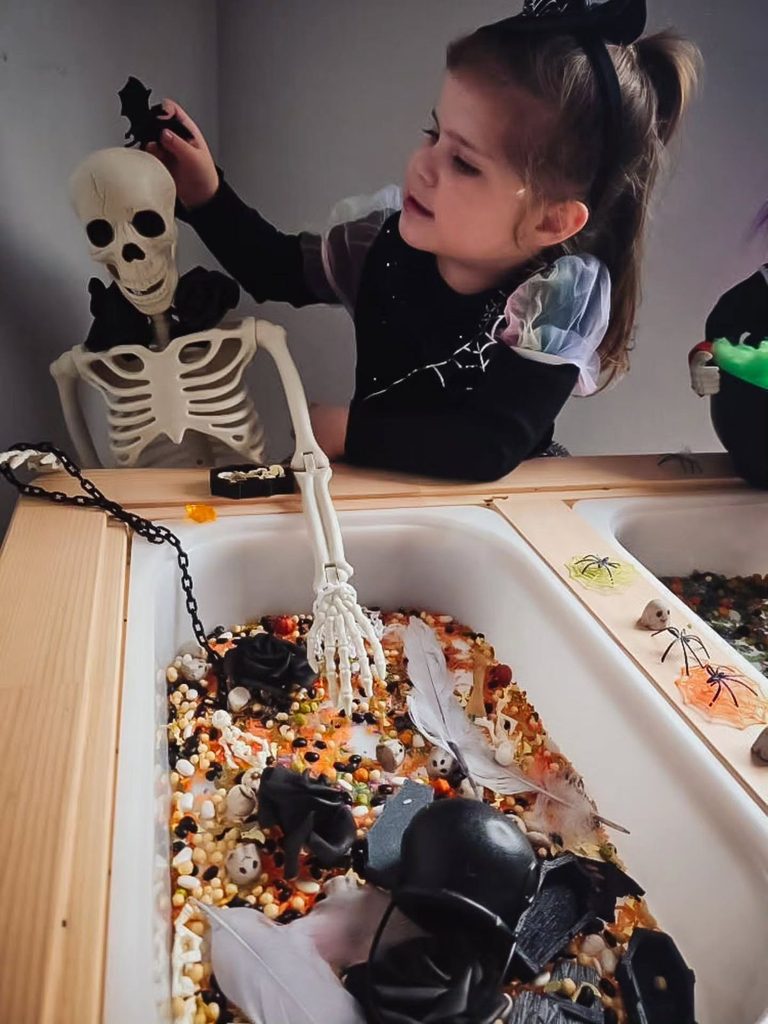
Decide on a simple theme before adding smaller items, such as a graveyard, a witch’s kitchen, or a pumpkin patch. A clear theme helps you choose items that feel connected, rather than a random mix of unrelated toys.
This also gives your child a small story to act out while playing, not just loose sensory exploration. Keeping the theme simple works better than trying to fit too many ideas into one single bin.
A single strong idea usually holds a child’s attention longer than several competing ones. Ask your child which theme excites them most before gathering items, since their input leads to longer play.
Writing the theme down somewhere visible also helps you stay focused while shopping for small pieces later.

Add Small Toys and Trinkets
Mix in small plastic spiders, pumpkins, bats, or skeletons to match whatever theme you picked earlier. Thrift stores and dollar stores often carry cheap seasonal toys that work perfectly for this kind of bin.
These small items give your child something to search for and pull out of the base material.
This kind of hands on searching pairs well with other seasonal activities your family already enjoys. See 35 Halloween Activities for Kids They’ll Actually Want to Try for more ideas that work well with this.
Rotating in a few new trinkets every so often keeps the search feeling fresh instead of predictable. Hiding a few items deeper in the base material gives older kids more of a challenge to work through.

Include a Range of Textures
Add a few items with different textures, like smooth stones, soft feathers, or slightly rough pinecones. Mixing textures keeps the bin interesting well beyond the first few minutes of play.
Some kids gravitate toward soft materials, while others prefer something with more resistance to dig through. Offering a range gives every child something that feels right to their own preferences.
This variety also makes the bin useful later, even once the theme has worn off a little. Kids with strong texture preferences often reveal them clearly during this kind of play, which is useful information.
Grouping similar textures into small piles is another way to extend play once the initial exploring has slowed down.

Add Scoops, Tongs, and Tools
Small scoops, spoons, tongs, or cups give your child tools to interact with the bin beyond just their hands. Tongs in particular help build fine motor skills while still feeling like play rather than practice.
Kids often enjoy sorting items by size or color once they have a proper tool to work with. Keep a few tools available, but do not feel like you need anything fancy or expensive here.
A simple kitchen spoon works just as well as anything purchased specifically for this purpose. Offering two or three tools also gives siblings something to do side by side without fighting over one.

Add a Bit of Sound to the Play
Some kids enjoy a bin more when there is a small sound element mixed into the visual and tactile parts. Dried beans in a sealed container make a soft rattling sound when shaken or poured.
A tiny bell hidden among the base material adds a small surprise element when your child finally finds it. This is not necessary for every bin, but it adds a layer of interest for kids who enjoy sound.
Even something as simple as crinkly paper mixed into the base gives a different kind of feedback with every scoop.
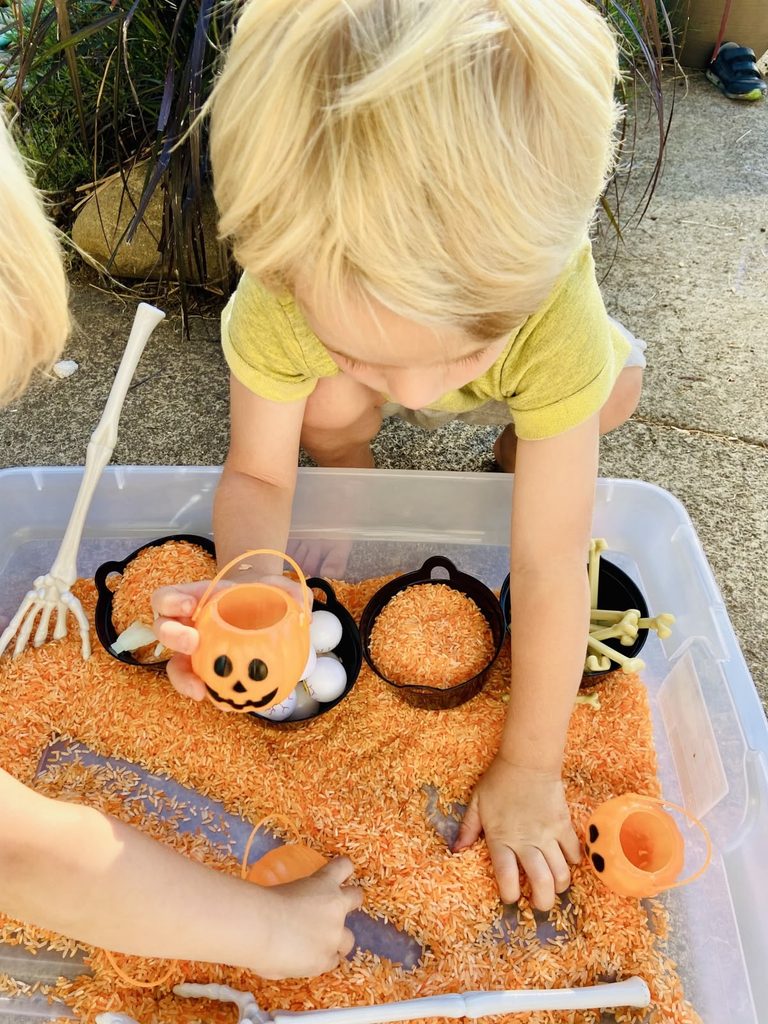
Watch for Choking Hazards with Younger Kids
For toddlers or very young children, skip small items that could easily end up in a mouth. Larger pom poms, bigger plastic toys, and thicker fabric pieces work better for this younger age group.
Supervise closely during play regardless of age, since sensory bins work best with an adult nearby. This is especially true in the early stages, before you know exactly how your child interacts with each material.
A bit of caution here goes a long way toward keeping the activity both fun and safe. If you have children of different ages sharing one bin, consider building two smaller bins instead.
Checking product labels on small toys for age recommendations is also a quick way to avoid an unsafe choice.

Add a Small Container for Found Items
Give your child a small cup, bag, or box to collect items they find while digging through the bin. This adds a sense of purpose to the play, rather than simply moving items around without any goal.
Kids enjoy having a place to keep their favorite finds, especially if they plan to show someone later. A clear jar works particularly well, since your child can see their collection growing as they play.
This small addition often extends how long a child stays engaged with the activity overall. Counting the collected items together at the end also turns cleanup into one last small moment of the game.

Set Up in an Easy to Clean Space
Place the bin on a tray, an old sheet, or directly on a floor that is simple to sweep afterward. This saves you from stressing over spilled rice or scattered items during the middle of play.
A defined play space also helps your child understand where the activity starts and ends. Kids tend to explore more freely once they know spills are not something to worry about.
A little preparation here makes the whole activity far less stressful for everyone involved. Setting this boundary once, at the start, saves you from repeating the same reminder throughout the whole session.
A small handheld vacuum kept nearby also makes cleanup fast enough that it barely feels like a chore afterward.
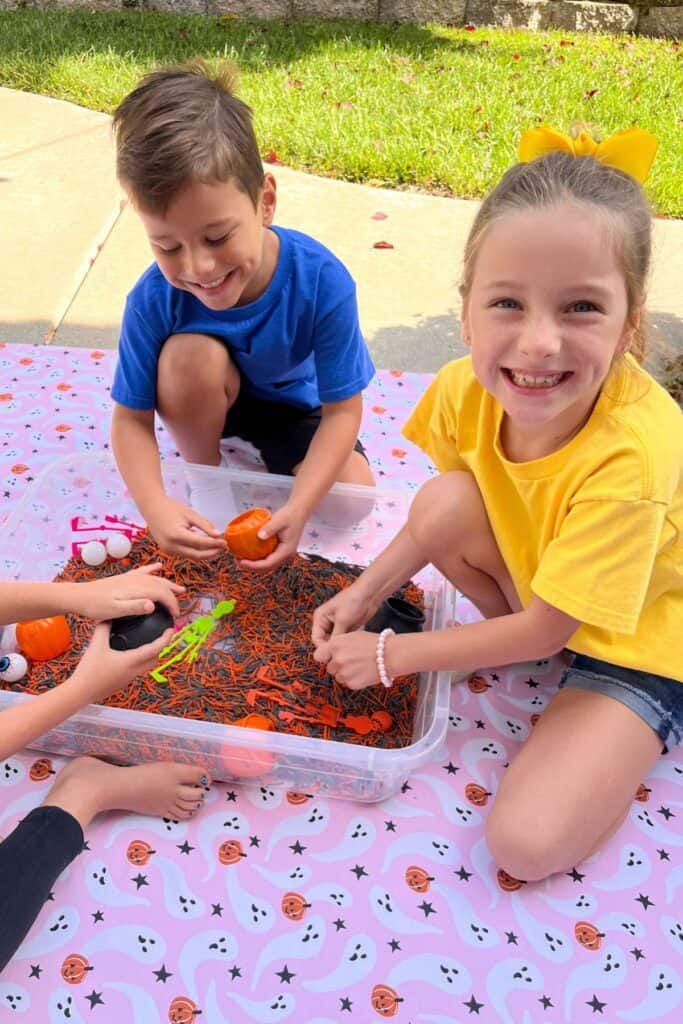
Build a Bin in Under Ten Minutes
Even without much time, a decent sensory bin comes together fast using items already around the house. A bag of dried beans, a few toy spiders, and a plastic tub are often all you truly need.
This works well on a day when plans changed suddenly or your child needs something quick to stay occupied. The same idea applies to costumes: see How to Put Together a Last-Minute Halloween Look Without Buying a Full Costume.
A rushed bin can still hold a child’s attention just as well as one planned days in advance. The main goal is simply giving your child something to explore, not achieving a picture perfect setup.
Even a mismatched collection of random household items can work, as long as there is enough variety. Keeping a small emergency bag of base material and trinkets set aside makes this option even faster.

Use the Bin on a Cold or Rainy Day
A sensory bin works especially well when outdoor plans get canceled because of weather. It gives kids something engaging to do indoors without needing much space or setup time.
This matters more once the weather starts turning colder as Halloween season gets closer each year. See What to Wear Under a Halloween Costume When the Weather Gets Cold for a similar kind of planning.
Keeping an indoor activity ready reduces the stress of a sudden change in weather plans. A well stocked bin in a closet can turn a rained out afternoon into a genuinely enjoyable one instead.
Keeping the bin in an easy to reach spot also makes it more likely to actually get used.

Let Your Child Help Build the Bin
Involve your child in picking the theme, choosing items, and even mixing the base material together. This turns setup itself into part of the fun, rather than something done entirely for them ahead of time.
Kids tend to engage more deeply with a bin they helped create from the very start. Even small choices, like picking between two colors of rice, give your child a sense of ownership.
This step costs no extra time but adds real value to the whole experience. Letting your child gather a few small toys themselves turns a shopping trip into part of the fun.
Praising their choices along the way, rather than correcting them, keeps the whole setup process feeling collaborative rather than supervised.

Turn Bin Play into a Small Learning Moment
A sensory bin can quietly teach counting, sorting, and simple vocabulary without ever feeling like a lesson. Ask your child to count the spiders they find, or sort items by color as they play.
This kind of gentle learning fits naturally into open ended play, rather than feeling forced or academic. See How to Turn Halloween Into a Fun Learning Experience for Kids for more ideas like this one.
A sensory bin is one of the easiest places to start if learning through play interests your family. Adding simple describing words, like rough, smooth, or heavy, also builds vocabulary without your child even noticing the lesson happening.
Older siblings can take on a teaching role here, guiding a younger child through counting or sorting together.

Pair the Bin with Costume Decisions
Sensory play can also help you understand what fabrics and textures your child actually enjoys touching. A child who avoids certain textures in the bin will likely avoid similar fabrics in a costume too.
Watching these small reactions gives you useful information before costume shopping even begins. See How to Choose a Halloween Costume Your Child Will Actually Love Wearing for more on reading these cues.
A sensory bin session can end up saving you a returned costume later in the season. Pay attention not just to what your child avoids, but also to what they keep coming back to touch again.
This kind of quiet observation often tells you more than a direct question about fabric ever could.
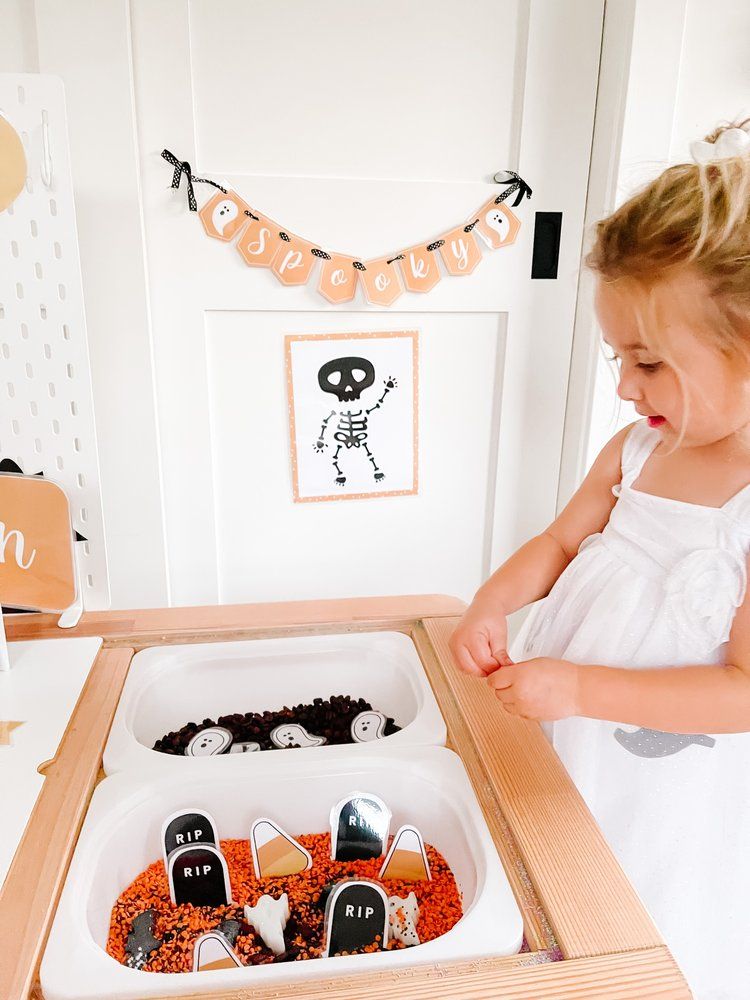
Style Hair After a Messy Play Session
Sensory bins can get a little messy, so plan on styling hair after play rather than before it. A simple bun or braid keeps hair out of the way while your child digs through the bin freely.
Once play is finished, a quick brush and a fresh style gets everyone ready for whatever comes next. See 27 Halloween Hairstyles for Little Girls That Complete Any Costume for quick options after messy play.
This small step avoids frustration over hair that gets tangled during an otherwise fun activity. Keeping a small brush and a few clips nearby saves you from hunting for supplies once play winds down.
A quick wipe of the hands before touching hair also keeps loose bits of the bin out of it.

Turn Leftover Materials into a Craft
Save a few extra items from the bin, like pom poms or small toys, for a future craft project.
This stretches the value of your original supplies well beyond just one afternoon of sensory play. 27 Halloween Crafts for Kids That Look Amazing has ideas that pair nicely with leftover bin materials like these.
A single bag of supplies can end up fueling two completely different activities across the season. This kind of reuse also cuts down on how much you need to buy in the first place.
Keeping a small labeled bag of extras means the next craft project can start with no extra trip. This habit also teaches kids that materials can be reused rather than thrown away once one activity ends.
Watch for Signs of Overstimulation
Some kids reach a point where a sensory bin stops feeling calming and starts feeling like too much at once. Watch for frustration, a sudden loss of interest, or a child pulling away from the bin entirely.
These are signs it may be time to take a short break or end the activity for the day. There is no need to push through if the fun has clearly run its course for now.
A short, positive session beats a long one that ends in tears or frustration. Ending on a good note also makes your child more likely to want to return to the bin next time.
Trust your own read here, since you know your child’s usual limits better than any general rule.
Store the Bin Between Uses
Keep the bin in a lidded container so it stays ready for the next play session without extra setup. This also keeps the base material dry and free of dust between uses throughout the season.
A stored bin can be pulled out again on a rainy afternoon with almost no preparation needed. Refreshing the theme occasionally, even slightly, keeps the bin feeling new rather than repetitive.
A little rotation goes a long way toward keeping this activity in regular use. Swapping a few small items every couple of weeks is often enough to make the bin feel new again.
Labeling the container by theme also helps if you end up building more than one bin across the season.

Add a Small Scent Element Carefully
A light, familiar scent can add another layer to the bin, though this step is optional and needs care. A few drops of cinnamon or vanilla extract on a cotton ball tucked into the bin adds a gentle smell.
Keep any scented item away from younger kids who still put things in their mouths during play. Strong or artificial scents can overwhelm some kids, so a light touch works better than a heavy one here.
This is a nice extra for kids who respond well to smell as part of their sensory experience. Testing the scent on a single cotton ball first also lets you gauge your child’s reaction before adding it fully.
Making Sensory Play Part of the Season
A Halloween sensory bin costs very little and gives your child a calm, hands on way to enjoy the holiday. It works well on its own or alongside the games, crafts, and costumes already part of your season.
If you want a fuller day of activities, see How to Plan a Halloween Activity Day Without Making It Complicated. Whatever your child discovers in the bin, the real value lies in the quiet, focused time spent exploring it.
A simple bin, built with a bit of thought, tends to get more use than most families expect at first. Once you see how easily it holds your child’s attention, it becomes hard to imagine the season without one.
Start small, watch what your child gravitates toward, and adjust the next bin based on what actually worked. Over time, this simple setup often becomes one of the quieter, more dependable traditions of the whole Halloween season.

