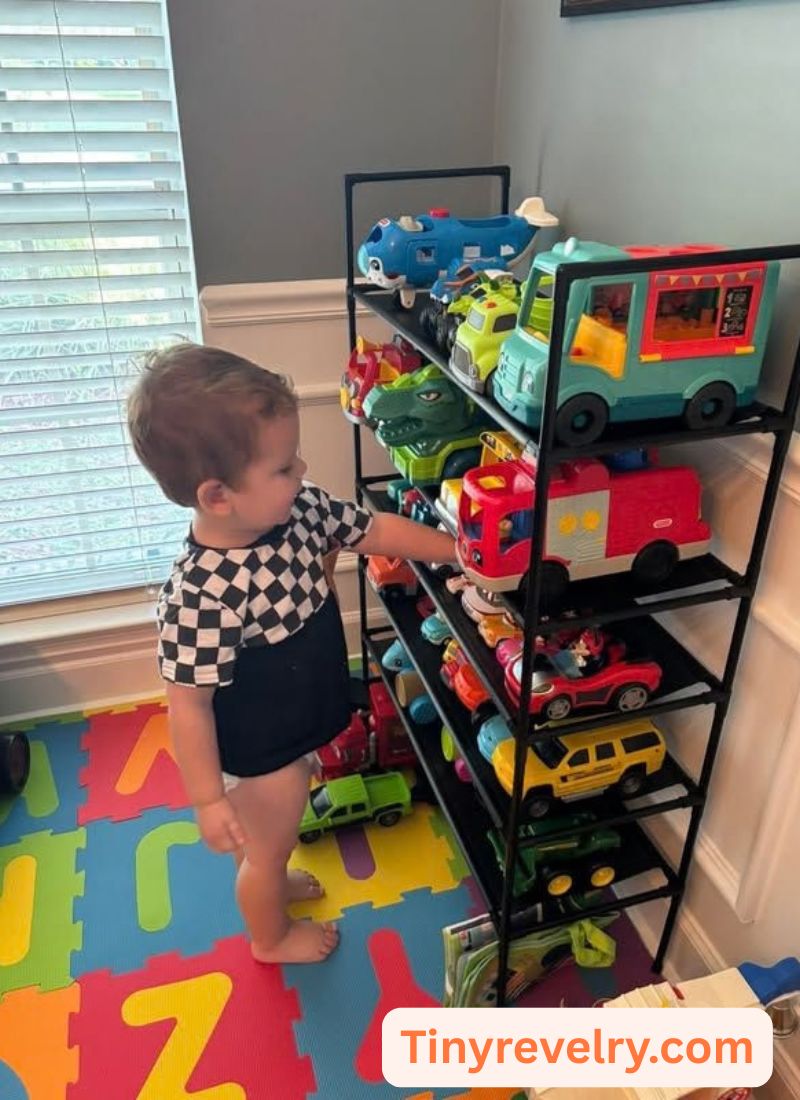
Organizing kids’ toys helps them get their toys easily without coming to disturb you every few minutes. Every parent knows the daily loop of “I can’t find it,” followed by a small meltdown in the doorway.
That loop costs more than patience, since children who cannot find toys stop playing and drift toward screens. Lost pieces, broken sets, and repeat purchases also drain the family budget every single year. A toy that cannot be found is a toy that does not exist for your child.
Independence is also at stake, because a child who can find and return toys alone gains real confidence. The fix is not more storage but a smarter system that matches how children think and play. For the full picture, read The Complete Guide to Creating a Fun but Functional Kids’ Room alongside this guide.
This guide covers sorting, storage, labels, rotation, and the daily habits that keep every toy easy to find. Each step is simple, cheap, and easy to start this weekend with whatever containers you already own.

How to Organize Toys So Kids Can Actually Find What They Want
Why Kids Struggle to Find Their Toys
Most toy chaos comes from a system that makes sense to adults but not to children. Adults sort by neatness, so they stack, hide, and close things up behind lids and doors. Children sort by sight and memory, so a toy out of view often feels gone forever.
Deep chests, tall shelves, and mixed bins make finding one toy a tiring treasure hunt. When the hunt fails, children dump every container onto the floor and then walk away.
That pile then becomes the mess you spend your evening clearing up for the third time.
Too many toys make the problem worse, because more items mean more digging and more chaos. Ask yourself what your child sees when they walk into the room and want to play. If the answer is a wall of closed doors, the whole system needs a rethink.
Fixing this starts with seeing the room through your child’s eyes, not through your own adult eyes. Crouch down to their height and look around for a full minute before you change anything.
You will spot hidden shelves, out-of-reach bins, and messy corners that quietly block easy and happy play.
Take Everything Out and Sort It
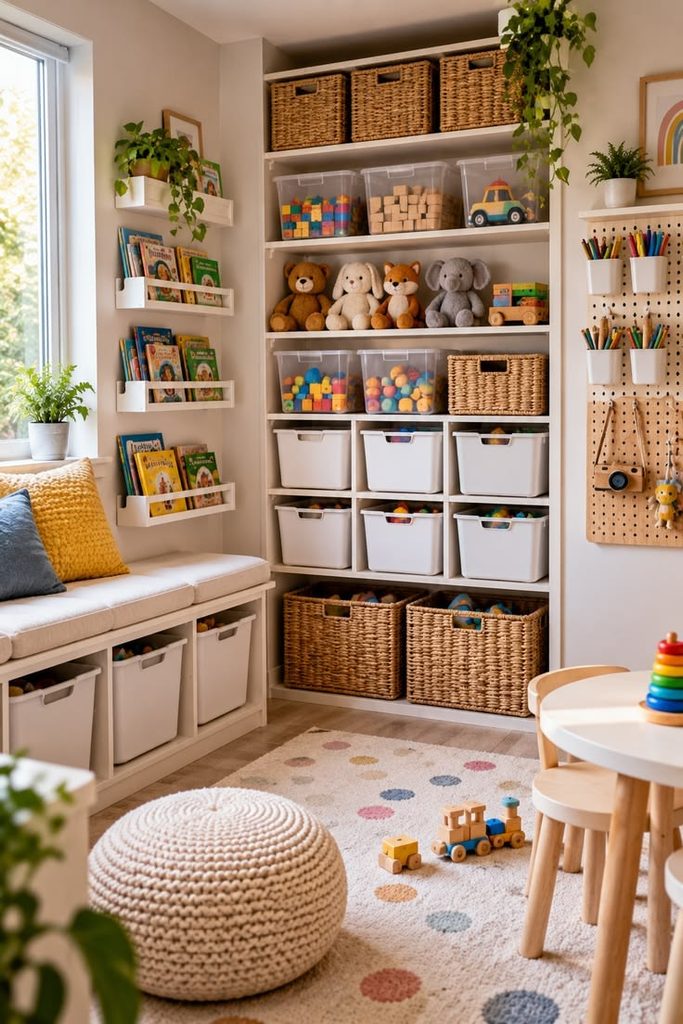
Start with a clean slate by emptying every toy container onto the floor or a large sheet. Seeing the full pile shocks most parents, and that shock makes the next decisions much easier.
Sort toys into rough groups such as blocks, dolls, vehicles, puzzles, art supplies, games, and pretend play.
Do not organize yet, because the first job is only to see what you actually own. Set aside anything broken, missing pieces, or clearly too young for your child right now.
Check batteries in noisy toys, since dead electronic toys often sit ignored for months in a bin.
Wipe down anything sticky or dusty while everything is out, which makes the room feel fresh. Keep a notepad nearby and write the category counts, such as twelve cars or nine stuffed animals.
Those numbers show you where the clutter lives and which groups need the most space.
This step takes about an hour, so pick a quiet afternoon when your child is out or napping. Older children can join, but very young ones tend to refill bins as fast as you empty them. A clear view of everything you own is the base for every decision that follows.
Let Go of Toys That No Longer Earn Their Space
Once toys are sorted, remove the ones that no longer deserve a place in your child’s room. Broken toys, games with missing pieces, and outgrown baby toys are the easiest items to release.
Ask your child to pick favorites, because their choices often surprise you and guide the rest.
Duplicates deserve a hard look, since one set of toy cars is usually enough for play. Try the box test by hiding doubtful toys for a month and watching for any complaints. If nobody asks for them, donate the box without opening it again, and feel good about it.
A separate play area helps, as The Best Way to Create a Playroom Without Filling Your Home With Toys shows. Never remove toys in secret, because children notice missing favorites and trust matters more than space. Let your child help choose what goes to charity, so giving feels kind and not scary.
Fewer toys means less to sort, less to lose, and much less to pick up every night. Keep sentimental items in a small memory box, so nothing truly meaningful ever disappears by accident.
Aim to keep only what fits comfortably in the storage you plan to use for toys.

Group Toys by How Kids Play
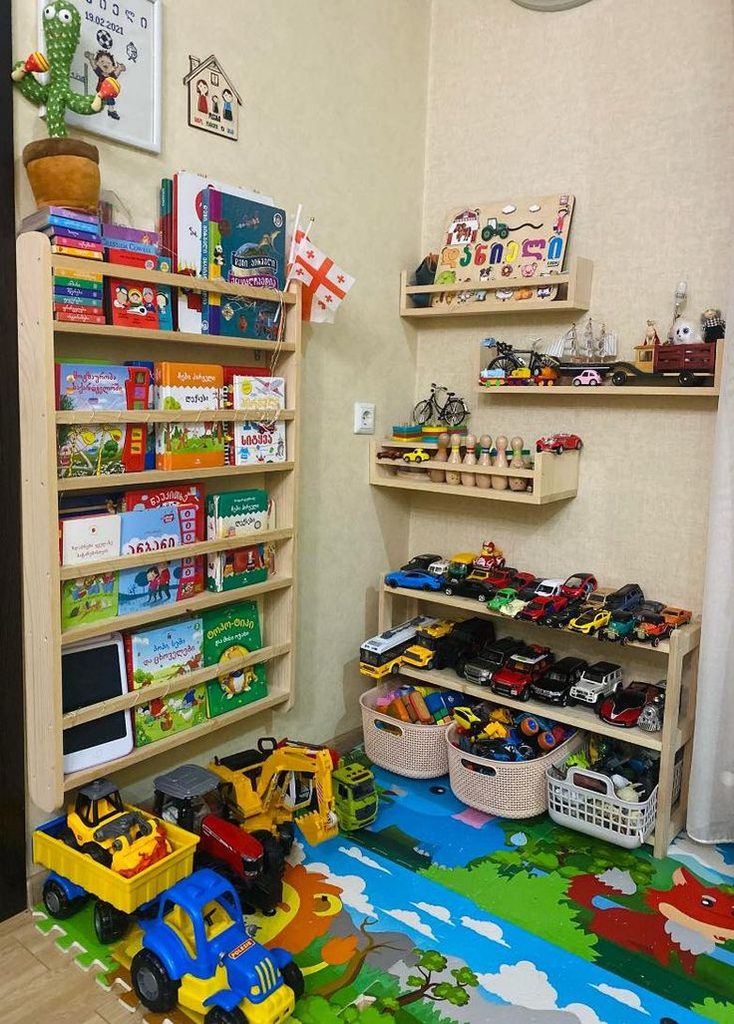
Children think about play in activities, so group toys by what they do, not by size. Keep all blocks, construction sets, and magnetic tiles together in one clear spot for building play.
Pretend play gets its own group with dress-up clothes, dolls, play food, and toy kitchen items.
Vehicles, trains, and tracks belong together, since children usually grab them all at the same moment. Art supplies, craft kits, and stickers form another group that needs its own protected home.
Games, puzzles, and cards should stay together, ideally in boxes that stack neatly on one shelf.
Limit yourself to five or six groups, because too many categories confuse both you and your child. Ask your child to name each group in their own words, which makes the system truly theirs.
Test the plan by asking them to find one toy, then time how long it takes.
If the search feels slow, merge groups or move the group to a more obvious spot. Sorting by play type also helps you notice gaps, such as too many dolls and no blocks.
This one change often does more for tidiness than any new furniture or fancy storage system.

Store Toys at Your Child’s Height
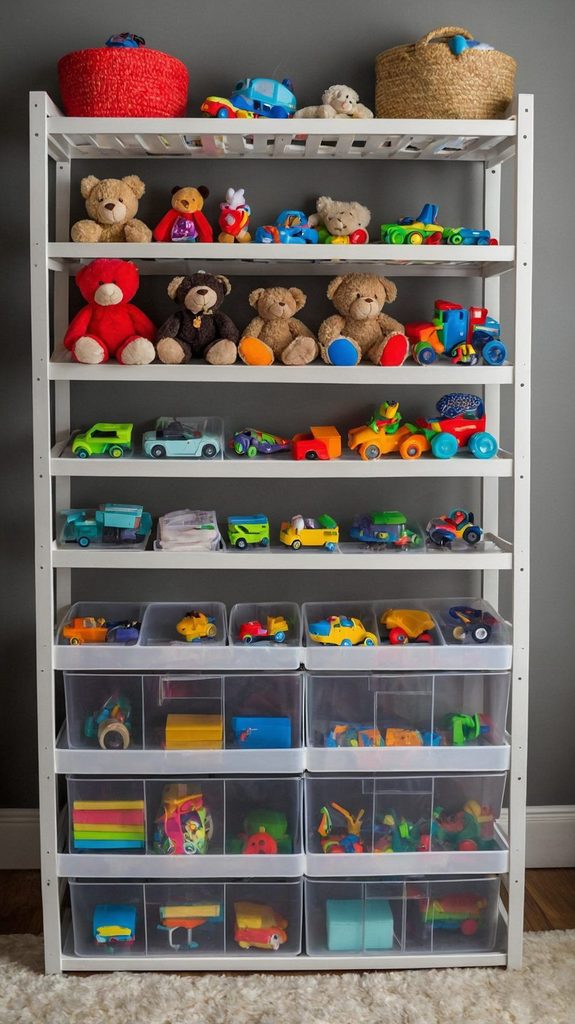
A toy your child cannot reach is a toy that will bring them running to you. Place everyday toys on low, open shelves where small hands can grab and return them alone. Keep the lowest shelf for heavy items, and place lighter toys higher so nothing tips forward.
Reserve high shelves for rarely used toys, special sets, and items that need adult supervision. Adjustable shelves grow with your child, as How to Design a Kids’ Bedroom That Grows With Your Child explains.
Secure every tall unit to the wall, because bookcases can tip when children climb them.
Leave a little empty space on each shelf, so pulling out a bin never feels like a struggle. Avoid deep toy chests, since toys sink to the bottom and everything ends up dumped out. Chests with heavy lids can also trap small fingers, which makes open bins a safer choice.
Check the height every six months, because a child grows faster than most parents realize. A simple step stool can help older kids reach the top shelf when they need a special item.
When storage matches your child’s height, they stop calling you and start taking care of themselves.
Choose Open Bins for Everyday Toys
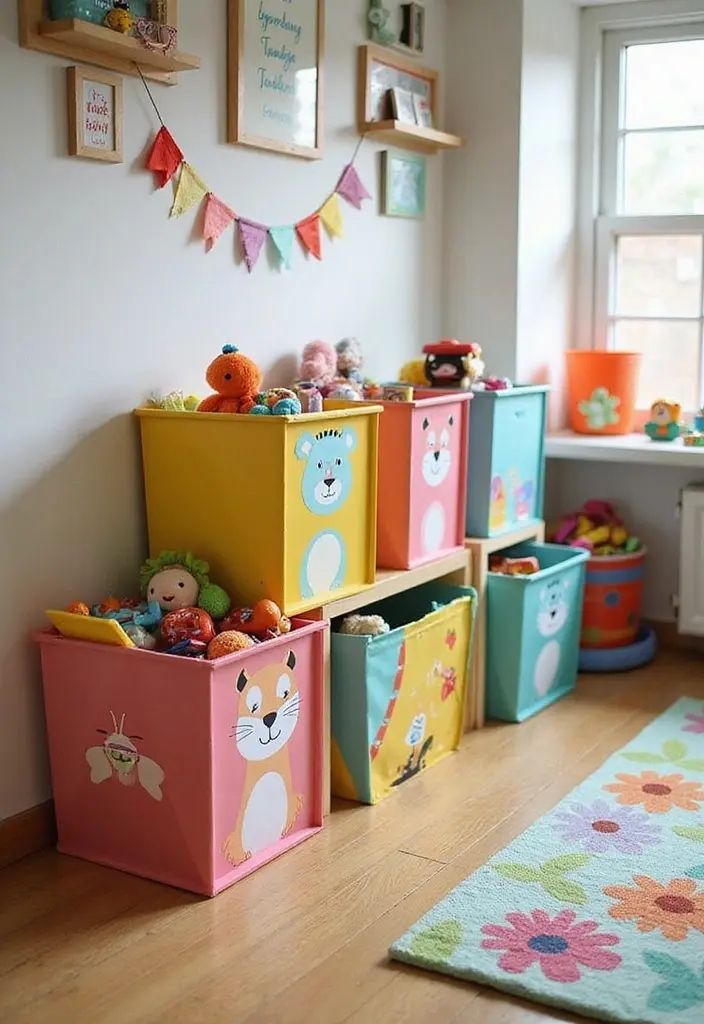
Open bins and baskets are the simplest tool for toys your child uses every single day. Fabric bins, wooden crates, and woven baskets look nice and let children drop toys in fast. Lids slow children down and often end up lost, so skip them for everyday toys.
Each bin should hold only one group, because a bin of mixed items becomes a junk box. With little space, read How to Organize a Kids’ Room When There Is Barely Any Storage for ideas.
Choose a matching set of bins, since a calm look makes the whole room feel tidier.
Pick sizes that suit the toy group, with large bins for stuffed animals and small ones for cars. Do not overfill any bin, because a packed bin makes it hard to find and pull out toys. Use the bin size as a natural limit, and let something go when the bin is full.
Soft fabric bins are kinder to toddlers, and they squeeze into odd corners better than hard plastic. Look around the house first, because baskets and boxes you already own often work well.
Good bins turn cleanup into a quick drop-in game that even a toddler can win.

Label Every Container Clearly
Labels turn a row of identical bins into a system that children can read and follow. Pre-readers need picture labels, so tape a photo or drawing of the toy on each bin. Older children can read words, so add a short, simple label beside the picture as well.
Use large, clear print, and place the label at your child’s eye level on the front. Let your child help make the labels, which builds pride and helps them remember each spot. Take a quick photo of each toy group and print it small, then laminate or tape it.
Color coding also helps, such as blue bins for building toys and red for pretend play. Keep the labels honest, since a bin marked cars should never hold random crayons or stuffed bears.
Update the labels when toys change, so the system keeps matching what is really inside.
Labels also help visitors, babysitters, and grandparents, who can then tidy up without asking a thousand questions.
Once your child knows the labels, they can find and return toys without any help. That small habit saves you dozens of daily interruptions and gives your child real control.

Give Small Pieces Closed Containers
Tiny pieces like Lego bricks, beads, and puzzle parts vanish very fast in open bins and baskets. Closed containers keep small parts together and stop them from spreading all across the floor.
Clear plastic boxes with snap lids let children see the contents without opening every single one.
Zip bags work well inside a larger bin, especially for board game pieces and card sets. Store each puzzle in its own box or bag, and tape a picture of the finished image on top. Use divided trays for craft items, so beads, buttons, and stickers stay sorted by type.
Keep small parts away from toddlers, since choking hazards need a higher shelf or a locked box. Teach older children to close each container properly before moving on to the next activity.
A tray or an old baking sheet can catch small pieces during play, so nothing rolls away.
Check containers every few weeks and remove any stray parts that belong somewhere else entirely. Toys with lost pieces are frustrating, and good containers prevent most of those small tragedies.
This step protects your money and keeps a favorite set complete for years of play.
Set Up a Simple Toy Rotation
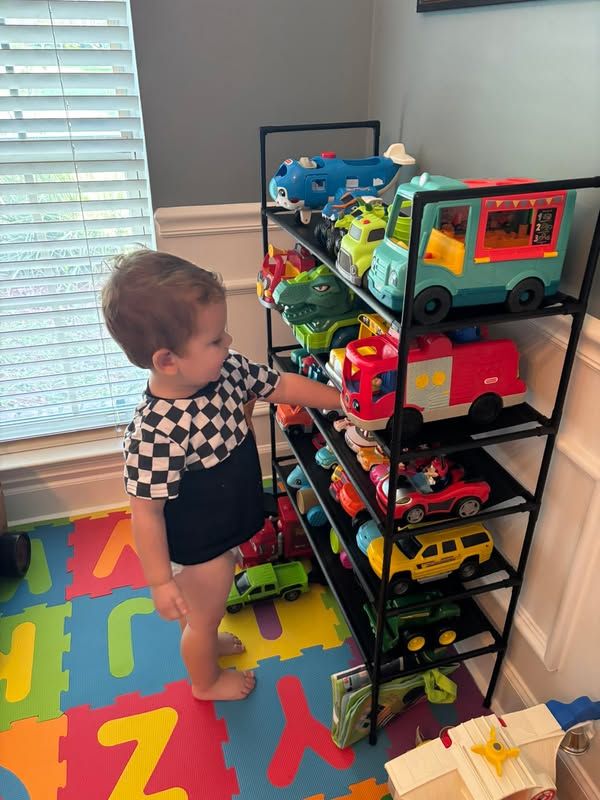
Toy rotation keeps a smaller collection feeling fresh, which cuts clutter without any new purchases. Keep about half of the toys out, and store the rest in labeled bins in a closet.
Every two or three weeks, swap one or two bins with something from the storage area.
Toys your child has not seen in a while feel brand new when they return. My sister started this when her son’s room overflowed, and the change surprised her within a week. He played longer with each toy, and he stopped asking for new ones at the store.
Keep comfort items, like a special bear or blanket, in the room at all times. Rotate toys of the same type, such as swapping one puzzle for a different puzzle. Let your child choose the next bin, since choice adds excitement and a sense of control.
Set a phone reminder so the routine survives the first busy month and becomes a habit. Rotation also makes cleanup lighter, since fewer toys are out and fewer items need sorting daily.
Store rotation bins where your child cannot reach them, so the system stays under your control.

Give Books Their Own Home
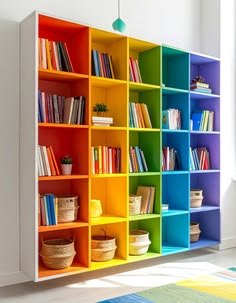
Books get lost in toy bins, so give them a separate home with a shelf or ledge. Books need their own spot; see How to Create a Reading Corner Your Child Will Actually Want to Use. Display a few covers facing outward, since children pick books by pictures more than by titles.
A wall-mounted ledge or a slim shelf keeps covers visible and takes almost no floor space. Keep about ten to fifteen books on display, and rotate them along with the toys. Store extra books in a box, and swap them in when your child loses interest.
Separate board books for toddlers from chapter books for older children, so each child finds their level.
A cushion or beanbag nearby invites reading, and it keeps books away from the toy chaos. Return library books to one basket, so they never disappear under the bed or sofa.
Read together in that spot often, because your presence makes the corner a happy place. Books stored with care last longer, and they encourage your child to handle pages gently.
A tidy book area also helps children link reading with calm, quiet, and real comfort.
Keep Art Supplies and Homework Separate
Art supplies and school items mix easily with toys, and they cause some of the worst messes. Give crayons, markers, paper, and glue a caddy or a lidded box of their own. Store paint and glue out of reach, and let children ask for them when needed.
Homework needs a calm spot, so read How to Create a Kids’ Study Space That Encourages Better Focus for tips.
Keep school supplies away from toys, so a pencil never disappears into a pile of blocks. A small table with a tray of supplies lets creative play stay in one contained area.
Use a clothesline and clips to display finished art, which saves shelf space and boosts pride. Photograph older drawings and store the paper copies together in one flat box each year.
Wipe tables after messy projects, and teach children to wash their hands before touching toys.
A washable mat under the art table protects floors and shortens the cleanup time considerably. Clear rules about where art happens keep paint and glue away from beds and carpets.
When creative supplies have a home, children stop leaving crayon stubs in every corner of the house.

Organize Toys in a Small Bedroom
A small bedroom needs a lighter toy load, so keep only current favorites in the room. Small bedrooms need extra care, so read How to Make a Small Kids’ Bedroom Feel Bigger and More Functional too.
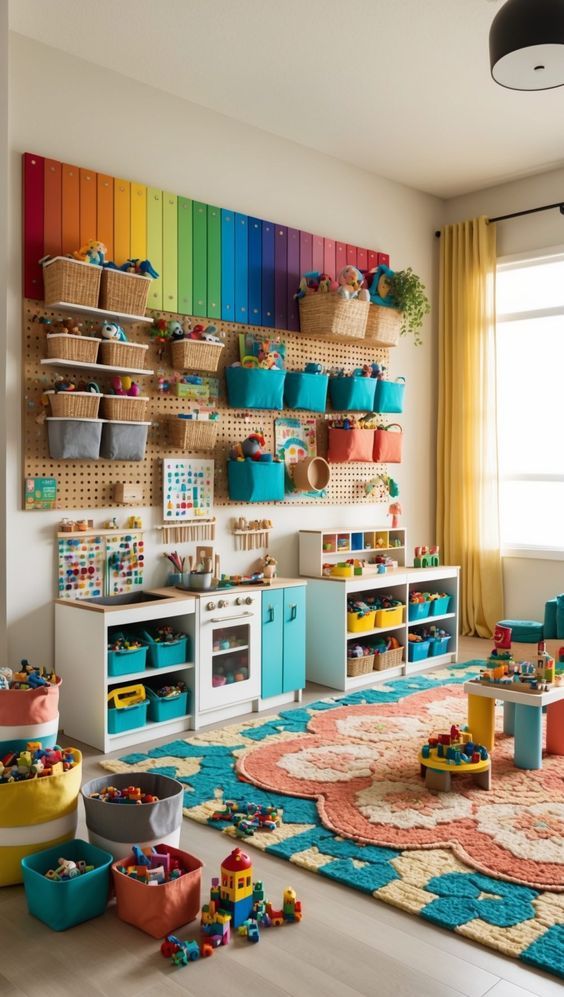
Use the vertical space with wall shelves, pegboards, and hooks that hold bags of toys.
The gap under the bed hides a flat, wheeled bin that can hold bulky toys or games. Over-the-door organizers hold small toys, dolls, and figures without taking up any precious floor space.
Choose a bench with lift-up seating, so a seat and a toy chest live in one piece.
Keep the play zone small, marked by a rug that can roll up at night. Store the rest of the toys in a hall closet, a garage bin, or another shared area. Small rooms feel crowded quickly, so edit the toy collection every season without any guilt.
Choose open-ended toys like blocks, cars, and dolls, since they take less room than large sets. A tidy small bedroom also helps children sleep, since clutter can make bedtime feel restless.
Every item in a small room should have a home, or it should leave the room entirely.

Plan for Siblings Who Share Toys
Two children mean two sets of favorites, and that creates arguments about who owns what. Sibling rooms need clear rules, so read What Every Parent Should Know Before Designing a Shared Kids’ Bedroom first.
Give each child a personal bin for special toys that are not meant for sharing.
Everything outside those bins belongs to both children, and both must treat it with care. Use different bin colors, so each child can spot and return their own belongings quickly. Keep shared toys, like blocks and board games, in a central bin both can reach.
Set simple rules such as taking turns, asking first, and putting things back in the right place. A timer can settle arguments over a popular toy, since turns feel fair and predictable.
Store delicate items for older children on a high shelf, away from curious younger hands.
Hold a short family meeting each month to talk about what works and what feels unfair. Praise cooperation when you see it, because kids repeat what earns warm attention from parents.
A fair system turns shared play into teamwork instead of a daily battle over toys.
Teach Kids to Put Toys Back
The best system fails if your child cannot use it alone, so teach the routine early. Kids love doing things alone, as How to Create a Montessori-Inspired Kids’ Room Without Redoing Everything explains nicely.
Show your child each step once, then step back and let them try it themselves.
My niece learned to tidy at age three, using picture labels on her low bins. She matched each toy to its picture, and she treated cleanup like a small game. Give a five-minute warning before cleanup, since sudden stops often lead to protests and tears.
Play a favorite song during cleanup, and end the task when the song finally finishes. Praise effort instead of perfection, because a messy shelf can still be a big step forward. Tidy together at first, then hand over more of the job as your child grows.
Children copy adults, so keep your own shared spaces neat and let them see you put things back. Avoid redoing their work, since fixing it behind their back tells them their effort does not count.
Over time, tidying becomes a habit that spreads to bedtime, mealtimes, and even school routines.
Handle Gifts and Hand-Me-Downs
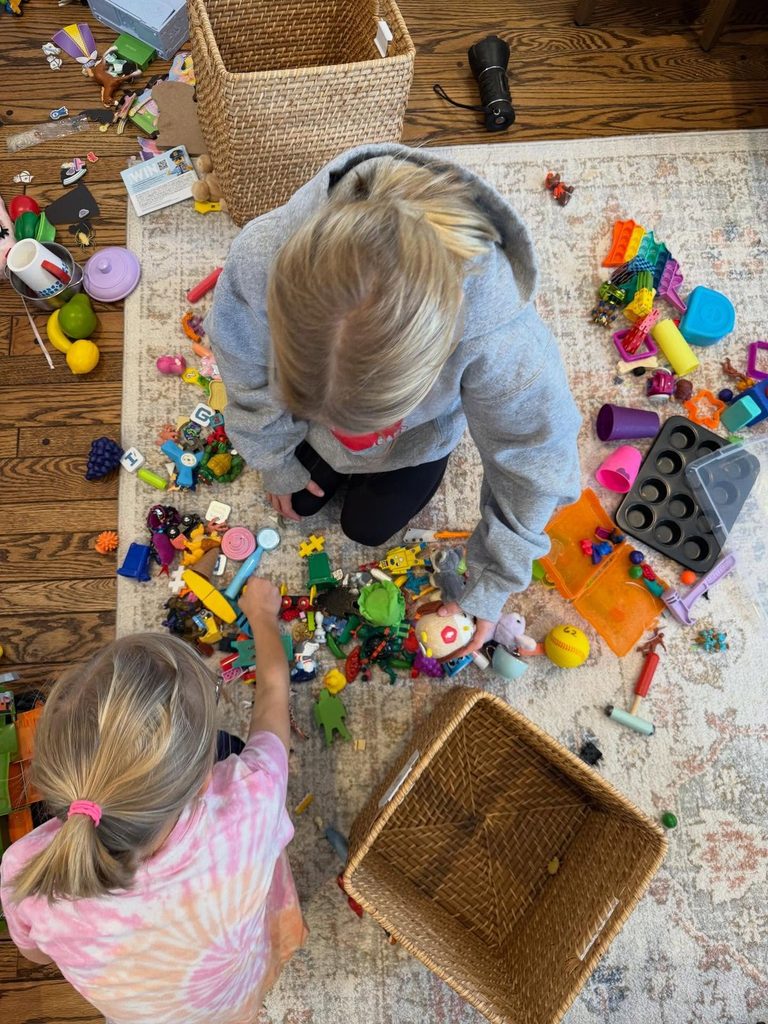
Gifts are a joy, but birthdays and holidays are also when toy piles double overnight. Talk to family early, and share a short list of toys your child truly wants. Suggest gifts that are not toys, like classes, tickets, books, or a shared day out.
A neighbor of mine asks guests for books, and her daughter’s shelf now overflows with stories. Use a one-in, one-out rule, so each new toy means an older one goes to donation. Store new gifts in a closet, then bring them out slowly over the coming weeks.
Slow release makes each toy feel special, and it fits neatly with your rotation system. Hand-me-downs deserve the same care, so sort them before they ever enter the toy room. Take only what your child will actually play with, and politely pass on the rest.
Skip party favors and goodie bags at your own parties, since they become instant clutter. Offer to donate unwanted duplicates together with your child, so giving feels like a shared good deed.
Being kind to relatives while staying firm about space gets a little easier with practice.
Build a Simple Daily Tidy Routine
Even the best system needs a routine, or the toys will drift back into piles. Start a ten-minute reset before bedtime, where all the toys return to their labeled bins. Keep the reset light and quick, so your child sees it as a normal part of the day.
Once a week, do a slightly deeper tidy, such as wiping shelves and checking for strays. Pick a fixed day like Sunday afternoon, so the habit fits into your family rhythm. Put on music and keep the mood light, so tidying feels less like a punishment.
Check under beds and behind furniture, because lost toys and stray pieces love hiding there. Keep a donation bag in the closet, so unwanted items leave the room right away.
Review the system every few months, and adjust bins, labels, and groups as your child grows.
A simple habit done daily beats a huge cleanup done only a few times a year. Stay calm when the room gets messy again, since tidying is a skill that grows slowly. Steady routines protect all the work you put in, and they keep toys easy to find.

Putting Everything Together
Toys that kids can find easily lead to longer play, fewer interruptions, and a calmer home. Start by sorting and letting go, then group the toys by how your child actually plays.
Store everyday toys low and open, label every bin, and keep small pieces in closed containers.
Rotate toys, give books and art supplies their own homes, and plan for siblings and small rooms. Teach your child to put toys back, and build a short daily routine to keep it working.
The result is a room where your child helps themselves and you finally get some peace.
Organizing kids’ toys helps them get what they want without disturbing you, and that benefit grows with every good habit.
Begin this weekend with one bin or one shelf, and let the small win carry you forward. Your child will play longer, you will worry less, and the room will finally feel calm.

