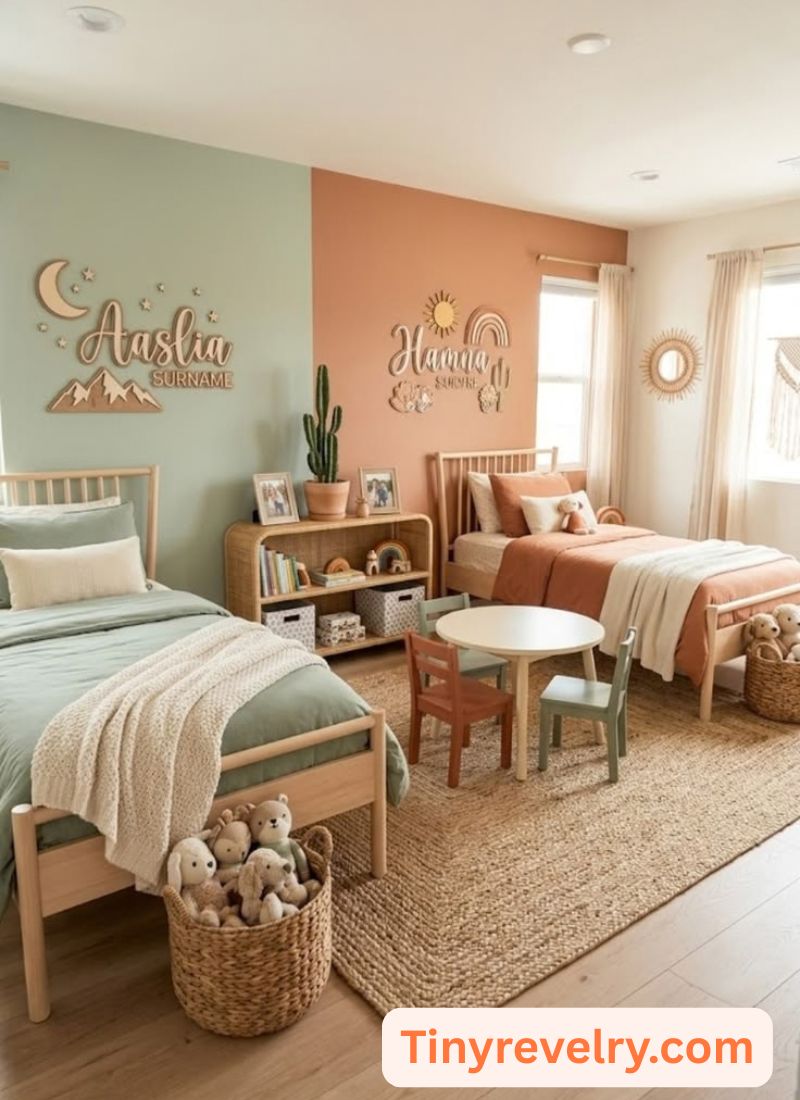
They might be siblings, but they have different choices in color and other things, and that gap is where most shared-room struggles begin. One child might love bright pink, while the other wants deep blue and nothing else. Designing a room for two very different personalities takes more planning than a single-child bedroom.
Done well, a shared room can build closeness, cooperation, and lasting childhood memories between siblings. Done poorly, it can spark daily fights over space, noise, and whose toys belong where. A calm base layer helps most, so see How to Design a Kids’ Bedroom That Grows With Your Child first.
This guide covers the key decisions parents face before setting up a bedroom for more than one child. You will learn how to plan the layout, the storage, and the rules that keep peace at home.

What Every Parent Should Know Before Designing a Shared Kids’ Bedroom
Start With a Conversation, Not a Shopping List
Before buying anything, sit down with both children and ask what they want from their shared room. Some kids care most about their bed, while others care more about a play corner or a desk.
Listen for both spoken wants and quieter concerns, like needing quiet time away from a noisy sibling.
Write down each child’s top three wishes, and look for overlaps you can build the plan around. Explain the budget and the space limits honestly, since children handle real constraints better than vague promises.
Let each child know they will get some say, even if they cannot get everything they ask for. This honesty builds trust and makes the final result easier for both kids to accept.
This early conversation prevents a lot of later disappointment and resentment about the finished room. It also gives you real insight into what each child actually values most in their space.
It also teaches children that sharing a space involves both give and take from everyone involved. That lesson carries well beyond the bedroom and into friendships, school, and later adult life.
A ten-minute conversation now can save weeks of friction once the new furniture actually arrives.
Revisit this conversation each year, since interests shift and needs change as children grow older together. What felt exciting at six may feel babyish at nine, so keep checking in with both kids.

Give Each Child a Clearly Defined Zone
Ownership matters deeply to children, and a shared room needs clear boundaries to feel fair to both kids. Assign each child a specific area with their bed, a shelf, and a drawer that belongs only to them.
Mark the zones with a rug, a piece of furniture, or even a strip of tape on the floor.
A tall bookcase can divide the room while still allowing light and airflow to pass through freely. Curtains hung from the ceiling offer a soft, flexible way to separate space without a permanent wall.
Color can also mark zones, using one paint shade or bedding pattern for each child’s half.
For more on flexible room division, How to Make a Small Kids’ Bedroom Feel Bigger and More Functional has useful ideas. Let each child decorate their own zone with posters, art, or a favorite color scheme.
Clear zones reduce arguments over territory and give each child a retreat that feels truly theirs. Even in a small room, a defined personal zone brings a real sense of calm and order.
Children who know exactly where their space ends tend to argue far less over shared territory.

Choose Bunk Beds or Separate Beds With Care
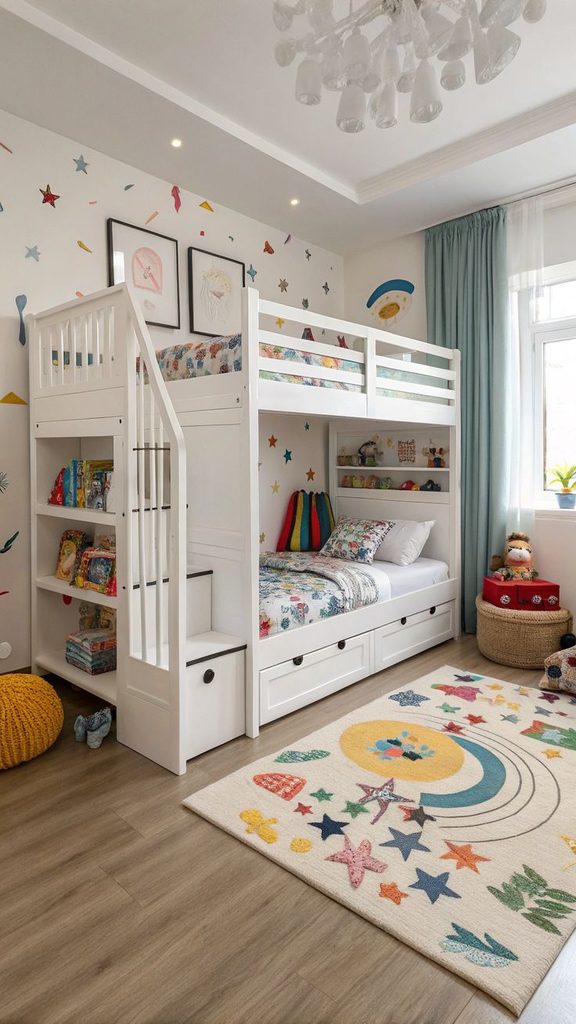
The bed choice shapes the whole room, so weigh the options carefully before making a final decision. Bunk beds save floor space and often feel like an adventure to younger children sharing a room.
Check the age and weight limits carefully, since most brands restrict the top bunk to children over six.
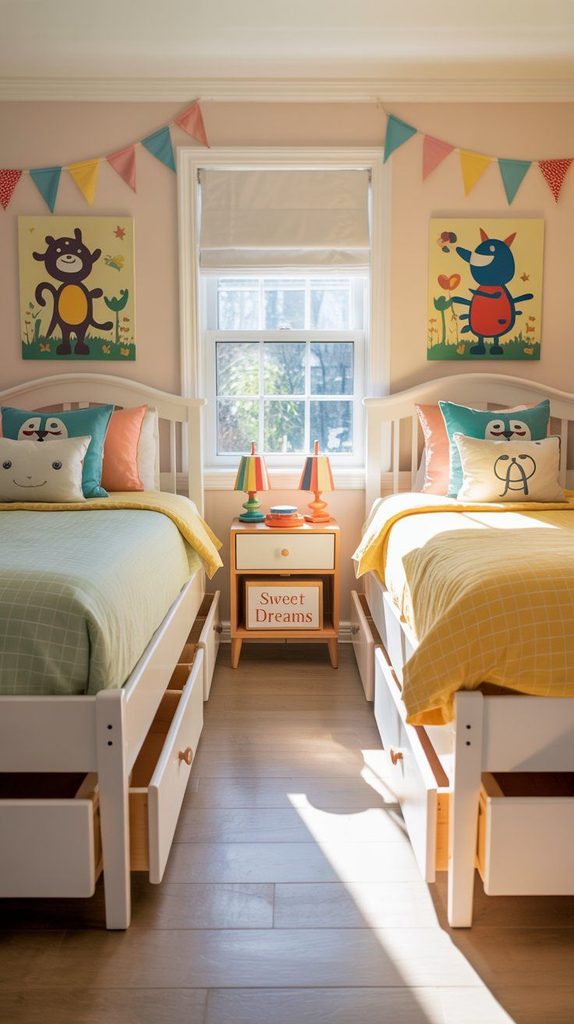
Loft beds raise one child’s sleeping area and free up floor space below for a desk or play. Separate beds placed on opposite walls give each child more privacy and their own clear sleeping zone.
If siblings argue over who sleeps on top, consider identical single beds instead of a bunk system.
Add guardrails to any elevated bed, and check that the ladder feels sturdy and secure for climbing.
A wobbly ladder or a loose rail can turn an exciting bunk bed into a hazard. A bed with drawers underneath adds storage without taking up any extra floor space in the room.
Let both children help decide the bed style, since a shared choice reduces future complaints and resentment. A decision made together also feels more exciting on the day the new bed arrives.
Test the beds together in the store if possible, since comfort matters as much as the overall look. A bed that looks great in a photo can still feel wrong once a child lies down.
Balance Two Different Personalities in the Decor
Siblings rarely share the exact same taste, and forcing one style on both children rarely works well. Choose a neutral base for walls, flooring, and large furniture, then let personality show through smaller items.
Bedding, cushions, and wall art are the easiest places to reflect each child’s personal favorite colors.
A shared color palette with two accent shades can unify the room while honoring both children’s preferences. For example, paint the walls a soft gray, then use pink accents on one side and blue on the other.
This approach works well alongside The Complete Guide to Creating a Fun but Functional Kids’ Room.
Avoid strong, competing themes, like dinosaurs on one side and princesses on the other, since clashing themes feel chaotic. Instead, choose a loose, shared theme, like nature or space, that both children can interpret differently.
Let each child pick one large item, like a lamp or a rug, that reflects their taste. One meaningful choice often satisfies a child far more than several smaller, scattered decorations would.
A room that respects both personalities feels fair, and fairness matters enormously to children sharing a space. Kids notice quickly when one sibling’s taste seems to dominate the whole shared room unfairly.
Plan Storage That Keeps the Peace
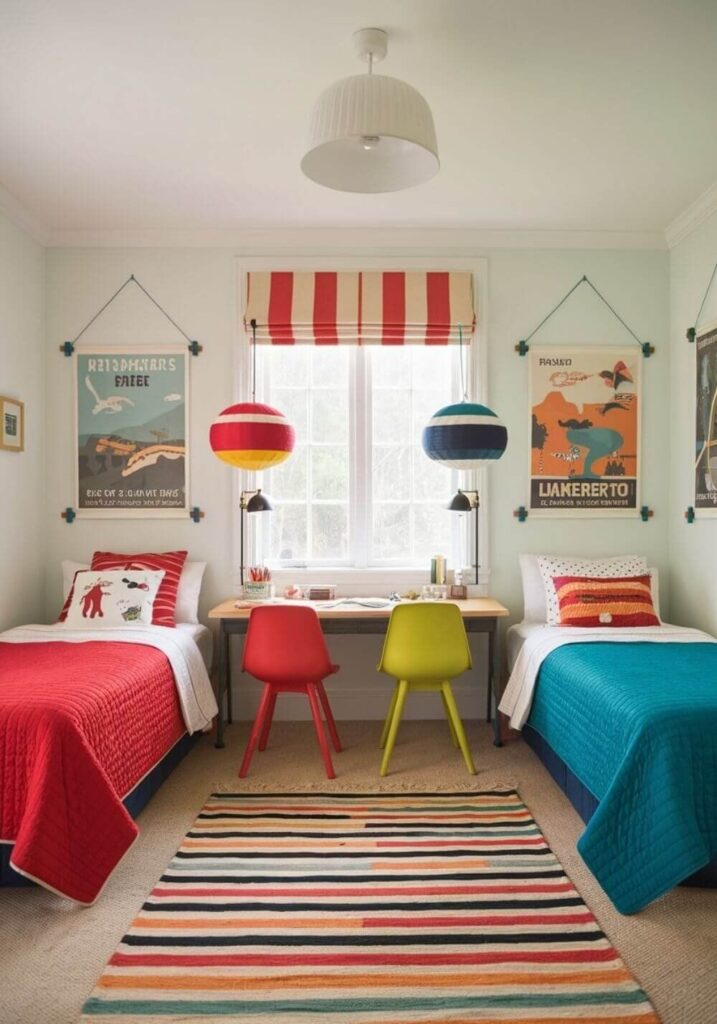
Storage disputes are one of the most common sources of conflict in any shared kids’ bedroom. Give each child a separate dresser, or divide one large dresser into clearly labeled sections for each child.
Use different colored bins or labels, so toys and clothes never get mixed up between siblings.
For a deeper storage plan, read How to Organize a Kids’ Room When There Is Barely Any Storage. Shared items, like board games and shared books, can live in a central bin both children can access.
Keep each child’s most treasured items in a drawer or box only they can open, respecting their privacy. A lockable box or a high shelf can protect small, special items from a curious younger sibling.
Label everything clearly with words or pictures, so ownership never becomes a daily source of disagreement.
Review the storage system every few months, since needs shift as children grow and collect new belongings. A quick check keeps clutter from quietly building up on either side of the room.
Clear, fair storage does more to prevent sibling conflict than almost any other single design choice. Most daily arguments trace back to a missing item or an unclear rule about ownership.
Handle the Toy Overlap Fairly
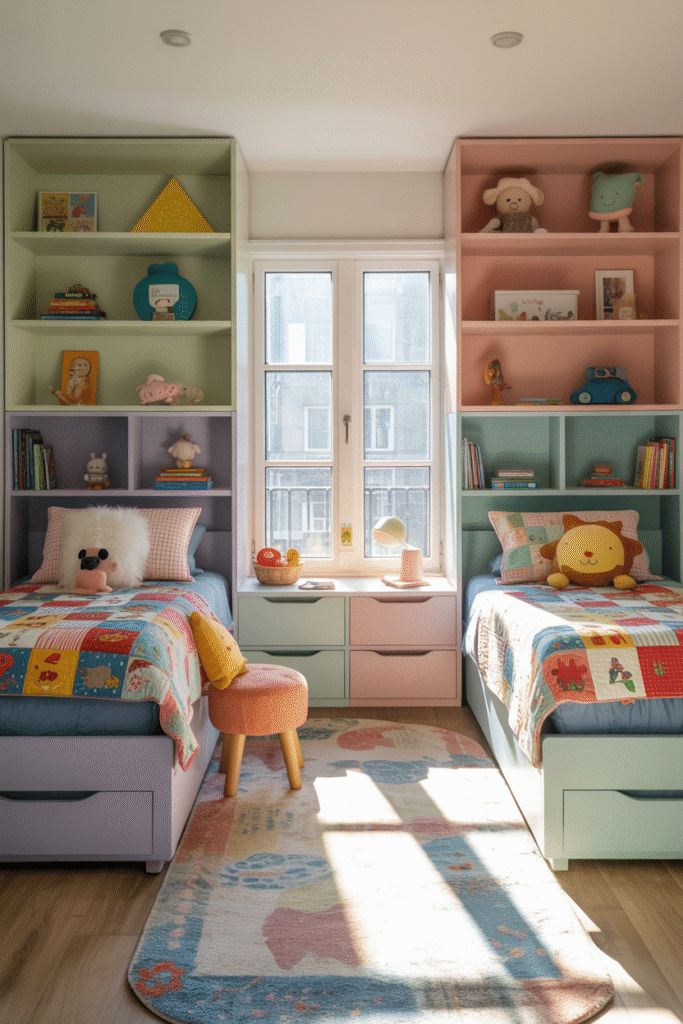
Toys often blur the line between personal and shared property, especially with younger siblings in the room. Decide early which toys belong to one child and which toys belong to the whole family.
A general rule, like all board games are shared but all stuffed animals are personal, helps enormously.
For toy-specific organizing tips, see How to Organize Toys So Kids Can Actually Find What They Want. Keep shared toys in a central bin, and rotate them the same way you would in any playroom.
A rotation system can also apply to shared items, so both children take turns choosing new favorites. Set simple, clear rules about asking before borrowing a sibling’s personal toys from their private area.
Praise good sharing when you see it, since kids repeat behavior that earns warm, positive attention. Specific praise, naming exactly what they did well, works better than a vague general compliment.
A visual chart with pictures can remind younger children which toys are shared and which are personal. Update the chart together whenever new toys arrive, so it stays accurate and genuinely useful.
Fair, predictable toy rules prevent daily squabbles and teach children real skills in negotiation and patience.

Create a Shared Play Area That Works for Both
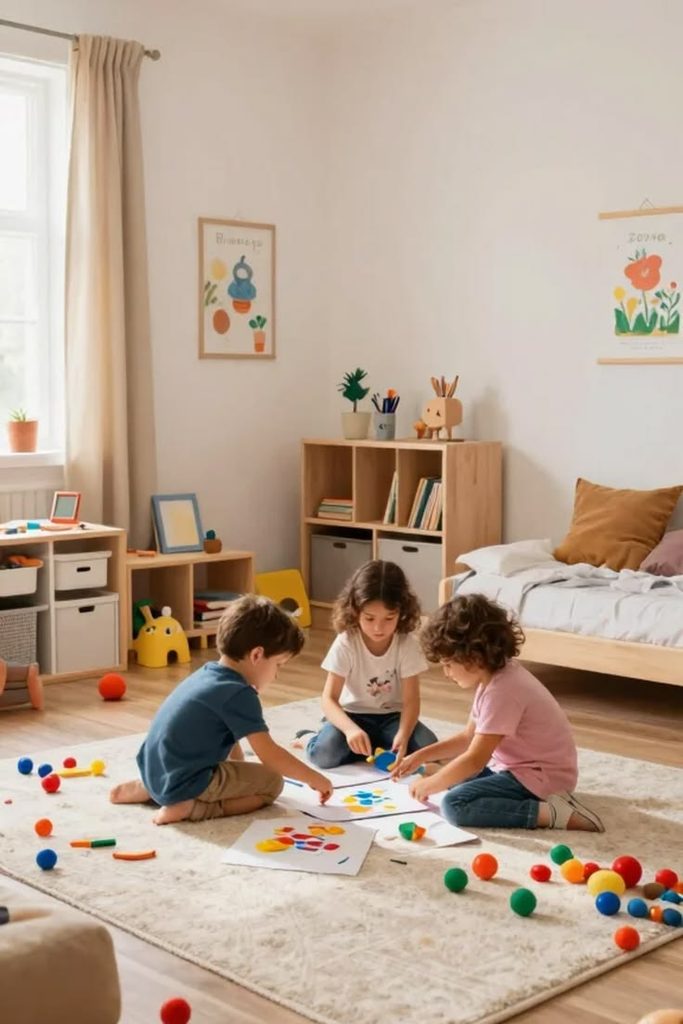
Even with separate zones, a shared room benefits from one open area where both children can play together. Keep the center of the room clear, so there is space for building, games, or simply running around.
A shared rug can mark this play zone and make cleanup feel like a joint, shared task.
For more ideas on avoiding toy overload, read The Best Way to Create a Playroom Without Filling Your Home With Toys. Choose toys that work well for group play, like building blocks, art supplies, and board games.
Rotate the shared play area’s contents regularly, keeping choices fresh without overwhelming the room with clutter. Set a shared cleanup rule, where both children pitch in together at the end of the day.
A joint play space, used well, can turn a shared bedroom into one of the best rooms in the house. Some of the happiest childhood memories happen in exactly this kind of small shared corner.
Encourage cooperative games over competitive ones, since cooperation fits the spirit of a well-shared bedroom. Building something together, like a block tower, often bonds siblings more than a race or contest.

Add a Reading Corner Both Children Can Enjoy
A shared reading corner gives siblings a quiet, calm space to retreat to together or separately. For detailed tips, see How to Create a Reading Corner Your Child Will Actually Want to Use.
A double-wide window seat or two floor cushions side by side can work well for two readers.
Keep a mixed collection of books that appeals to both children’s ages and current interests. Rotate the books often, since two different reading levels mean the shelf needs more frequent updates.
Set clear expectations about quiet time, since one child reading should not be disrupted by a noisy sibling.
A shared reading ritual before bed, even for just ten minutes, can become a favorite family habit. Let each child pick a book to read aloud on alternating nights, giving both a turn to choose.
This small rotation stops one sibling’s taste from quietly dominating every single bedtime story choice. A peaceful reading corner often becomes the calmest, most cooperative spot in the entire shared room.
It gives both children a place to slow down together without needing a single toy.

Set Up Study Spaces for Two
Homework in a shared room requires careful planning, especially once both children reach school age. For detailed guidance, read How to Create a Kids’ Study Space That Encourages Better Focus.
Two desks facing away from each other reduce distraction better than desks placed side by side.
If space is tight, a shared desk with two chairs can work if study times rarely overlap. Give each child their own supply caddy, so pencils and paper never spark daily ownership arguments.
Use noise-reducing headphones for one child if the other needs to work or read aloud nearby.
Stagger homework times when possible, so younger and older children are not competing for quiet at once. A simple rule about respecting a sibling’s focus time helps both children develop patience and consideration.
Good lighting at each desk matters, since dim light causes eye strain during long study sessions.
Two working desks in one room can succeed with clear rules and a bit of thoughtful scheduling. Check in occasionally to see if the setup still supports focus for both children equally.
Design for Different Ages and Stages
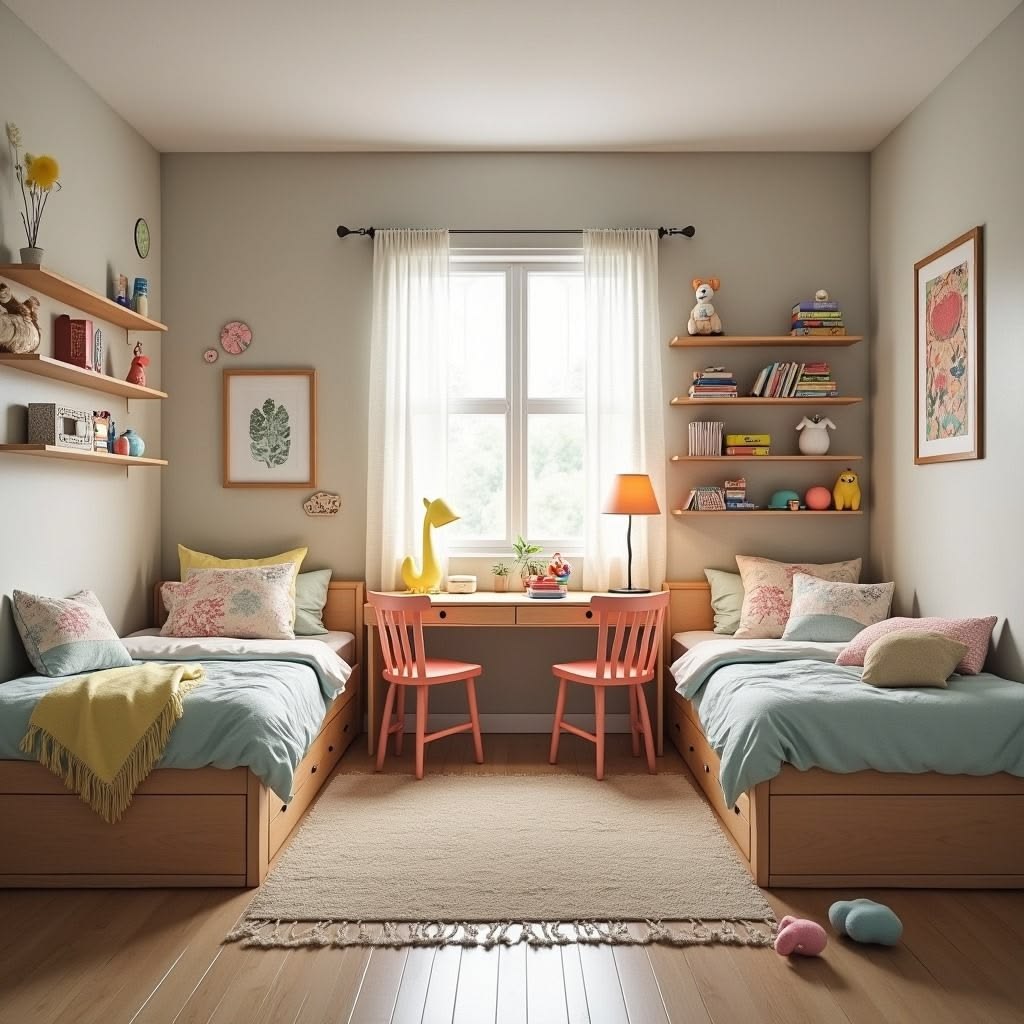
Siblings sharing a room are rarely the same age, and the design should reflect that gap honestly. A toddler needs low, open storage, while an older child needs shelves for books and hobby gear.
Place the younger child’s bed and belongings away from small parts that could pose a choking risk.
Adjust storage heights so each child can reach their own belongings without needing help from an adult. Give the older child a slightly later bedtime routine or a small reading light for quiet time.
A flexible plan today prevents a full redesign every time one child reaches a new stage.
Involve the older child in caring for the younger one’s space, which can build real responsibility and pride. Small tasks, like helping tidy a sibling’s shelf, teach patience and gentle leadership skills too.
Plan for Privacy Within a Shared Space
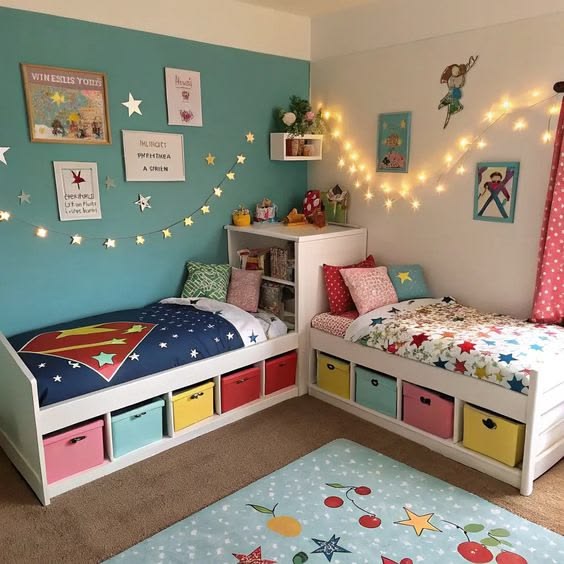
Privacy feels precious to children, even within a room they willingly share with a sibling. A curtain around one bed, a canopy, or a simple room divider can offer a private retreat.
Give each child a personal bulletin board or shelf where only they choose what gets displayed.
Respect closed doors, drawn curtains, and other small privacy signals, and teach siblings to respect them too. A journal or a private box with a small lock can hold items a child wants to keep secret.
Headphones can offer an auditory form of privacy, letting one child listen to music or a story alone.
Set house rules about knocking or asking before entering a sibling’s personal zone within the shared room. Privacy does not require physical separation, but it does require consistent respect from both children and parents.
A room can be shared and still honor each child’s need for a little personal space. Respecting that need early often prevents bigger requests for total separation later in their childhood.

Handle Different Sleep Schedules and Needs
Age gaps often bring different bedtimes, different wake times, and different sleep needs within the same room. A younger child might need an earlier bedtime and a nightlight, while an older child prefers reading later.
Blackout curtains can help an early sleeper rest, even if the older sibling stays up doing homework.
A small reading light lets the older child read quietly without disturbing a sleeping younger sibling nearby. White noise machines can mask small sounds, helping a light sleeper rest through a sibling’s later bedtime routine.
Stagger bedtime routines, so the younger child settles first while the older one has quiet, separate time.
Talk openly with both children about respecting each other’s sleep needs, even during weekends and holidays. Vacations and long weekends often disrupt routines, so a quick reminder helps everyone adjust smoothly.
A shared room can accommodate different schedules with a little structure and a few thoughtful adjustments. Most families find the right balance within the first few weeks of trying a new routine.
Good sleep for both children keeps moods calmer and reduces the friction that comes with shared living. Tired children argue more often, so protecting rest protects the whole household’s daily mood and energy.
Apply Montessori Ideas to a Shared Room
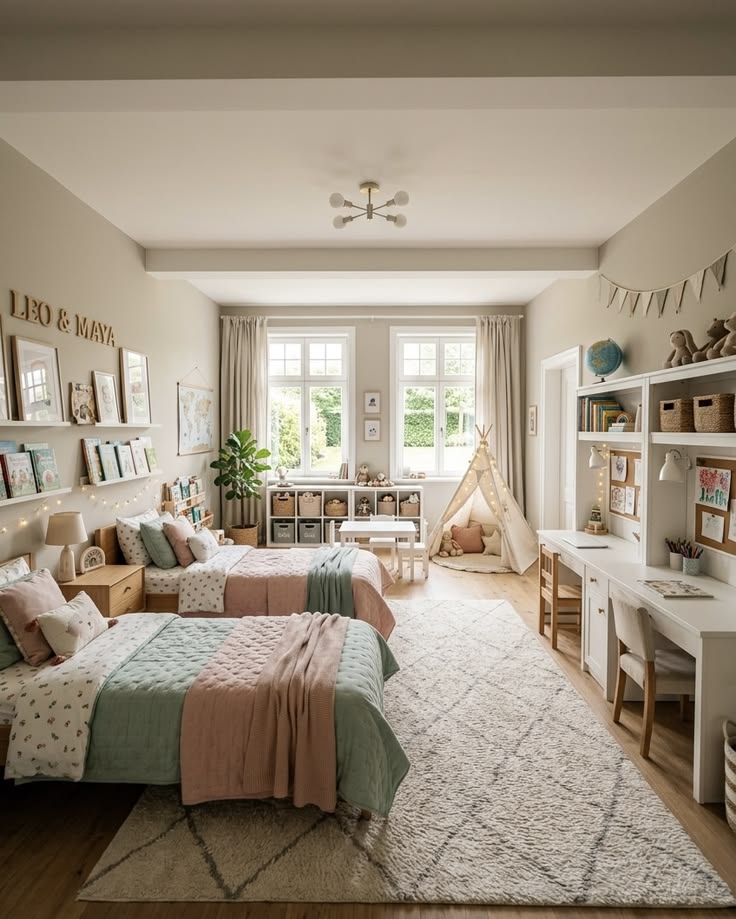
Child-led design principles work especially well in a shared room, since they encourage independence for both children. For more detail on this style, see How to Create a Montessori-Inspired Kids’ Room Without Redoing Everything.
Low, open shelves let both children reach their own belongings without needing to ask for help.
Order and consistency help two children coexist more peacefully, since everyone knows exactly where things belong. Give each child simple, achievable daily tasks, like making their own bed or tidying their own shelf.
This approach reduces parental referee duty, since children can manage more of their own space independently.
Keep furniture low and light, so both children, regardless of age, can move and adjust items themselves. A shared room built on these principles often runs more smoothly, with fewer daily conflicts over small tasks.
Parents also spend less time mediating, since the room’s own structure does some of that work. Independence, built early, becomes one of the quiet, lasting benefits of a well-designed shared bedroom.
Parents often notice fewer requests for help once both children can manage their own space.
Set Ground Rules Together
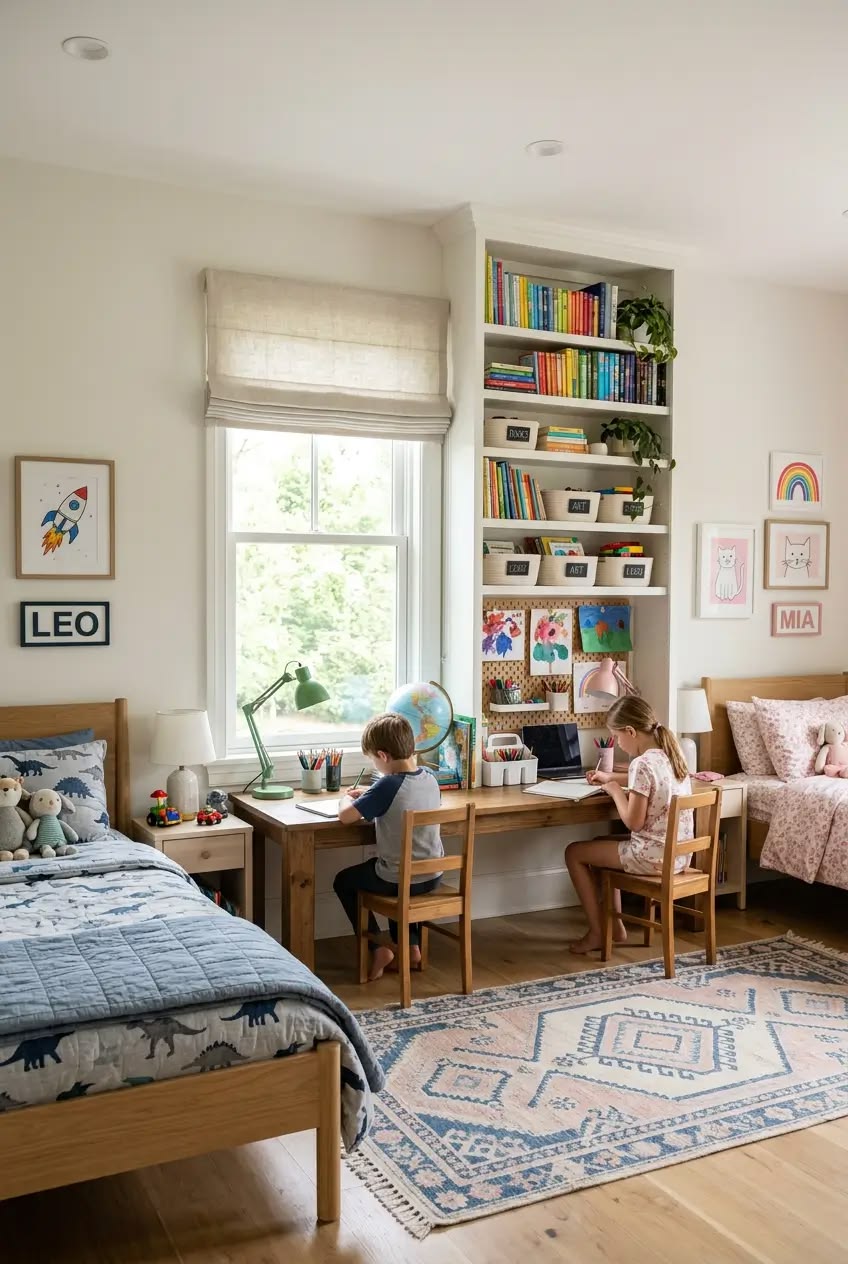
Rules work far better when both children help create them, rather than rules simply handed down. Sit down together and agree on basics like noise levels, bedtime, and respecting personal zones.
Write the rules down and post them somewhere visible, like the inside of a closet door.
Include rules about borrowing, tidying shared spaces, and handling disagreements without involving a parent immediately. Revisit the rules together every few months, adjusting them as both children grow and situations change.
Let children suggest consequences for breaking rules, since they often propose fairer terms than adults expect.
Praise moments of good cooperation specifically, rather than offering only vague, general praise for good behavior. Hold a short weekly check-in, where both children can raise concerns about the shared space calmly.
Even five minutes at the dinner table can catch small problems before they grow larger. Rules created together tend to stick far better than rules imposed entirely from the outside.

Prepare for the Room to Evolve
A shared room today will look very different in a few years, so build in room to change. Choose furniture that can be rearranged, added to, or divided differently as needs shift over time.
Keep major structural choices, like wall color and flooring, neutral enough to suit changing tastes.
Plan for the possibility that one child may eventually want or need their own separate room. If space allows, design the layout so the room can split into two if circumstances change later.
Ask both children yearly what they would change, and take their honest answers quite seriously.
Photograph the room every year, since looking back can show how much both children and their needs have grown. A shared bedroom is rarely a finished project, and treating it as a living space works best.
Flexibility now prevents a stressful, disruptive overhaul later on when one child’s needs shift suddenly. A room built to adapt saves both money and stress over the many coming years.
Watch for Signs of Real Conflict
Some sibling friction is normal, but ongoing serious conflict deserves closer parental attention and adjustment. Watch for signs like one child avoiding the room, frequent tears, or repeated complaints about unfairness.
A child who feels crowded or ignored may need a bigger personal zone or more quiet time.
Talk privately with each child sometimes, since a child may share concerns alone that they would not admit together. Look at age gaps, personality clashes, or simple overcrowding as possible causes of the ongoing tension.
Small changes, like adding a privacy curtain or adjusting bedtime, can resolve a surprising amount of daily friction.
If conflict remains constant despite changes, think about a room swap or a different arrangement instead. Sometimes a simple swap of beds or zones solves a problem that talking alone could not.
Every family and every sibling pair is different, so stay flexible and willing to adjust your plan. What works for a neighbor’s children may not work at all for your own family.
A shared room should feel like a benefit, not a constant source of stress for either child.
Putting Everything Together
A shared kids’ bedroom works best when both children feel heard, respected, and given a fair say in the design. Start with an honest conversation, then build clear zones, fair storage, and shared spaces that suit both personalities.
Balance individual taste with a unified base, and set rules together so both children feel ownership.
Plan for different ages, different sleep needs, and the reality that the room will keep changing over time. Watch for real conflict, and stay ready to adjust the plan as your children grow and change.
These steps turn a shared bedroom from a battleground into a space built on cooperation and mutual respect. None of this requires a large budget, only patience and a willingness to keep adjusting.
They might be siblings with different tastes, but a well-planned room can still make both of them feel at home. Start with one conversation this week, and build the rest of the plan from what you both learn.
Small, honest steps taken together usually beat one big, rushed weekend full of sudden changes. A fair, thoughtful shared room can become one of the best gifts you give your children.
It teaches lessons about compromise and kindness that will serve them well far beyond childhood.

