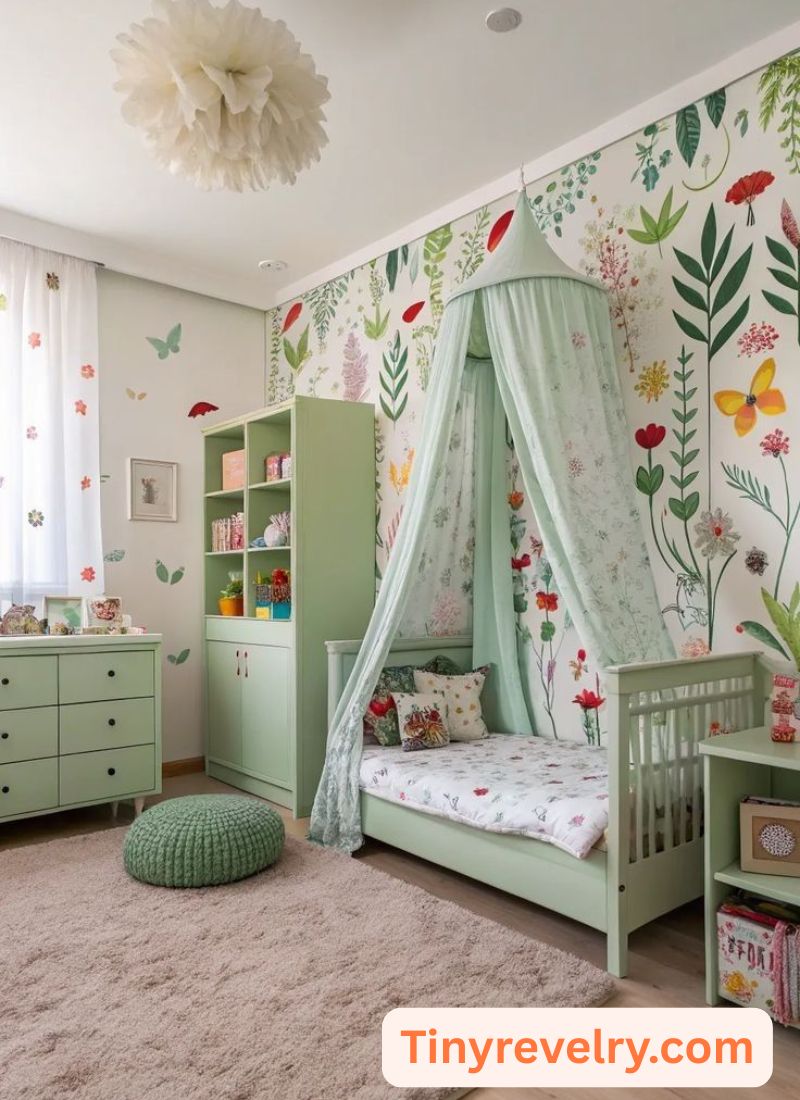
A kid needs a bigger bedroom where they can feel comfortable, but not every home has the space to give. The good news is that a small room can feel open, calm, and fully functional with the right choices. Size is not the only thing that decides how a bedroom actually feels day to day.
Smart layout, light colors, and clever storage can trick the eye and free up real floor space. Storage is often the biggest struggle, so see How to Organize a Kids’ Room When There Is Barely Any Storage. Small changes, made in the right order, add up to a room that finally feels roomy.
This guide walks through practical steps that work in almost any small bedroom, whatever its exact shape. You will learn how to plan the layout, choose furniture, and keep the space calm and useful.

How to Make a Small Kids’ Bedroom Feel Bigger and More Functional
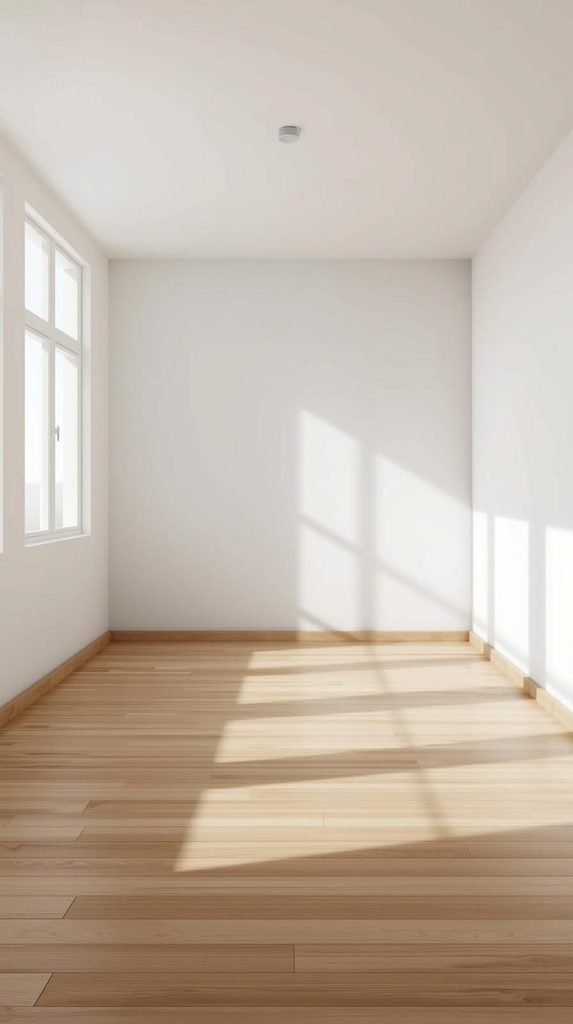
Start With an Honest Measurement of the Room
Before buying anything, grab a tape measure and record the exact size of the room. Note the length, the width, and the position of the door, window, and any closet. Mark where outlets sit on the wall, since lamps and devices will need to reach them easily.
Sketch a simple floor plan on paper, even a rough one drawn by hand will help. Include the swing of the door, since furniture should never block it from opening fully. Measure the height of the ceiling too, especially if you are considering a loft or bunk bed.
Note any sloped walls, radiators, or built-in features that limit where furniture can safely go. This step feels slow, but it saves you from buying a bed or desk that will not fit.
Take photos from each corner, since a picture often reveals problems your eyes miss in person.
Compare your measurements against the furniture you already own before buying a single new piece. This step prevents costly mistakes and gives you real confidence before any money changes hands.
A clear, accurate plan turns a stressful small room into a solvable, manageable design puzzle.
Choose a Bed That Fits the Room, Not Just the Age
The bed is usually the largest item in a small bedroom, so start your planning there. A twin bed against the wall, rather than the center, frees up the most usable floor space.
Consider a loft bed, which lifts the sleeping area and opens the ground below for play or study.
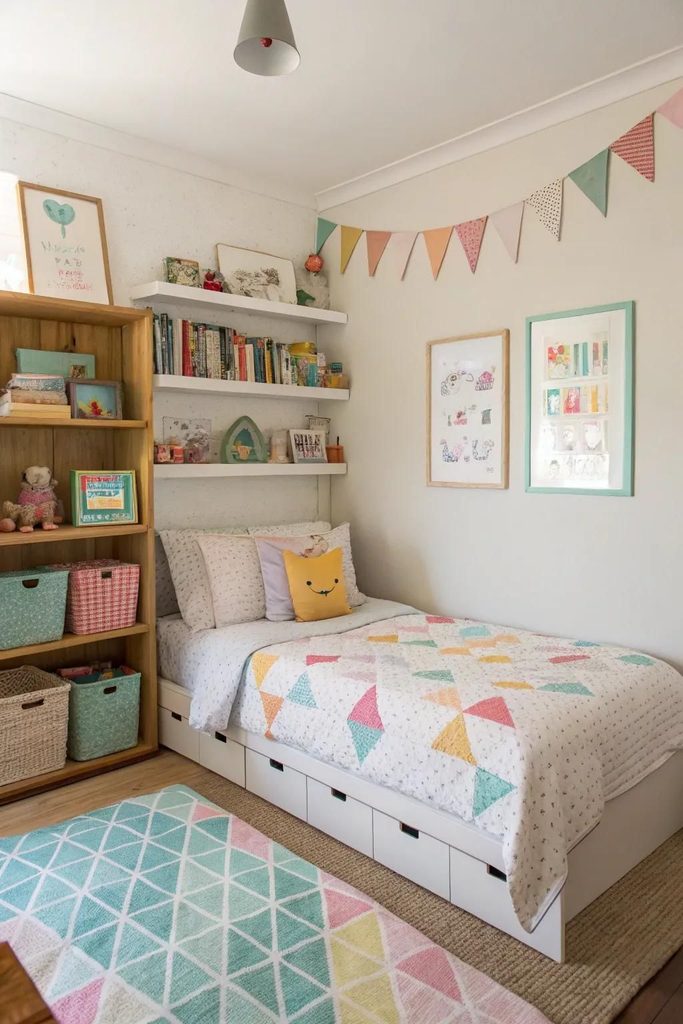
Bunk beds work well for shared rooms, and some styles fold or split apart when needed. A daybed with a trundle underneath can seat a child by day and host a guest at night. Beds with drawers built into the base remove the need for a separate dresser nearby.
Measure the walking space around the bed, and aim for at least two feet on each side. Push the bed into a corner when possible, since two exposed sides use more floor than one.
Skip a large headboard in a tiny room, since a simple frame takes up far less visual space.
See How to Design a Kids’ Bedroom That Grows With Your Child for more on furniture that lasts. A well-placed bed sets the tone for the whole room, so take real time to plan this choice.
A rushed decision here often causes regret once the rest of the furniture finally arrives.

Use Light Colors to Open Up the Space
Color has a strong effect on how large or small a room feels to the eye. Light shades like white, soft gray, and pale pastels reflect light and make walls feel farther apart. Dark colors can look bold, but they tend to shrink a room and make ceilings feel lower.
Paint the ceiling a shade lighter than the walls, since this simple trick lifts the whole room. Keep large surfaces, like the floor and curtains, in matching or similar tones for a seamless look.
A sudden change in flooring or wall color can chop a small room into smaller, choppier sections.
Add color through small items instead, like cushions, art, and a rug, which are easy to swap later.
Mirrors placed across from a window bounce light around and can make a room feel doubled in size. Choose a mirror with a simple frame, and hang it at a height your child can also use.
Sheer curtains let in more daylight than heavy, dark drapes, which can make a room feel gloomy. A bright, unified color scheme is one of the cheapest and most effective ways to gain visual space.
Test a few paint samples on the wall before committing to painting the full room.

Get Furniture Off the Floor
Floor space is the most valuable resource in a small bedroom, so protect it wherever you can. Wall-mounted shelves hold books, toys, and decor without eating into the walking area of the room.
A floating desk that folds against the wall clears the floor when homework is finished for the day.
Wall storage frees up floor space fast, and How to Organize Toys So Kids Can Actually Find What They Want covers this well. Hanging lamps and wall sconces free up the space that table lamps would normally take on a surface.
Hooks near the door hold bags, coats, and hats, instead of piling them onto a chair. A loft bed lifts the sleeping area entirely, leaving the full floor open for other daily uses.
Curtain rods and rails can hold dress-up clothes or extra storage bags along an empty wall.
Every item you lift off the floor makes the room feel larger and easier to move through. Before buying furniture, ask if a wall-mounted version exists, since it often saves valuable square footage.
A room with a clear floor always feels bigger than one packed with legs and low tables. Children also move more safely through a room that has fewer obstacles near the ground.

Choose Multi-Purpose Furniture
In a small room, furniture should never do just one job if it can possibly do two. A storage ottoman offers seating and a hidden spot for toys or extra bedding at once. A bed with built-in drawers below removes the need for a separate dresser in the room.
A desk with shelves attached saves the cost and the space of a standalone bookcase nearby. Trundle beds tuck a second mattress underneath, ready for sleepovers without using daily floor space.
Nesting tables can separate for playtime and stack together again once the activity is finished.
Fold-down desks and drop-leaf tables disappear against the wall when nobody needs to use them. A bench with a lid can hold shoes, blankets, or toys while also giving a spot to sit.
Multi-purpose furniture usually costs a little more, but it replaces two or three separate pieces at once.
Fewer, smarter pieces of furniture leave more open space, which changes how the whole room feels. Resist the urge to fill every gap, since some open space keeps a room breathable.
Before every purchase, ask what else this piece could do besides its most obvious single job.

Build Storage Upward, Not Outward
When floor space runs out, the walls become your best remaining option for extra storage. Tall, narrow shelving units hold far more than wide, low ones while using less floor area.
Cube storage on the wall keeps toys organized without spreading loose bins across the room.
Use the space above the door for rarely used items, like seasonal clothes or spare bedding. A ladder shelf leans against the wall and adds storage without needing any anchoring into the wall itself.
Pegboards let you rearrange hooks and small shelves as your child’s needs change over time.
This approach also fits well with child-led setups, explained in How to Create a Montessori-Inspired Kids’ Room Without Redoing Everything. Keep the most-used items at a height your child can reach without asking for help every time.
Place rarely used or fragile items higher up, where only an adult can safely reach them. Secure every tall unit to the wall, since a small room means furniture sits closer to active kids.
Vertical storage turns wasted wall space into one of the most useful areas in the room. Revisit the layout each year, since a growing child will reach higher shelves over time.
Make the Closet Work Harder
A closet is often underused, holding just a few clothes on a rod with empty space above and below. Add a second rod below the first one, since children’s clothes rarely need full-length hanging space.
Install shelves above the top rod for storage bins, out-of-season clothes, and spare bedding sets.
Use the closet floor for a small dresser, a shoe rack, or a stack of labeled bins. Slim, matching hangers save noticeable space compared to a mix of bulky plastic and wire hangers.
Hanging organizers with several pockets can hold folded shirts, socks, and small accessories in one place.
A closet door can hold hooks or an over-the-door organizer for shoes and small toys. If there is no closet at all, a slim wardrobe or an open rack can stand in for one. Fold clothes using the file method, so drawers hold more while staying easy for kids to search.
A well-organized closet can replace a dresser entirely, freeing a large piece of furniture from the room. Review the closet every season, and remove anything that no longer fits or gets worn.
A quick seasonal check keeps the closet efficient and stops slow, quiet clutter from building up.

Create Flexible Zones Instead of Fixed Furniture
A small room does not need a separate area for every single activity your child enjoys. Instead, design zones that can shift and serve more than one purpose throughout the day. A rug can mark a play area that becomes a spot for guests during a sleepover.
A small table can host homework in the afternoon and art projects on the weekend. Keep the middle of the room as open as possible, so it can flex to fit different needs.
A reading corner can share space with a windowsill seat, saving the cost of separate furniture. Use light, movable furniture like stools and poufs, so the layout can change in a few minutes.
Avoid pushing every item against the walls, since a completely empty center can feel oddly stiff. A softly divided room, using a rug or a low shelf, still feels open and easy to move through.
Flexible zones let one small room serve many purposes without feeling crowded or cluttered at once. Revisit the zones every few months, since your child’s interests will shift as they grow.

Keep the Room Edited and Uncluttered
Even the best layout fails if the room holds far more items than it can comfortably store. Go through toys, clothes, and books regularly, and remove anything broken, outgrown, or rarely used.
A smaller collection of loved items always looks and feels better than a packed room of extras.
See The Best Way to Create a Playroom Without Filling Your Home With Toys for similar toy-editing lessons. Keep a donation box in the closet, so unwanted items can leave the room the moment you notice them.
Set a simple limit for each toy category, using the size of the bin as your guide. When a bin is full, something old must leave before something new can join the collection.
A rotation system also helps, since it lets you store some toys elsewhere and swap them later.
Fewer items mean less to clean, less to trip over, and less pressure on the storage you have. An edited room, even a small one, always feels calmer and more spacious than a stuffed one.
Calm rooms also help children sleep better, since a cluttered space can quietly raise stress. Schedule a quick edit every few months, so clutter never has the chance to build up again.
Choose Scale-Appropriate Furniture
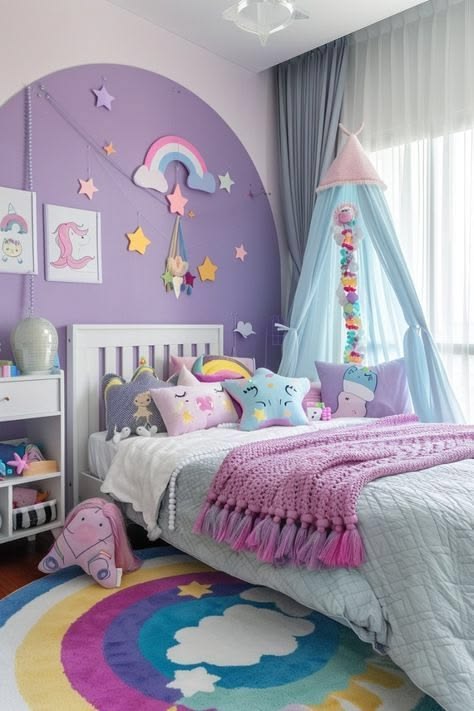
Large furniture can dominate a small room, even if it technically fits within the measured space. Choose pieces sized for the room, not oversized items meant for a bigger bedroom down the hall.
A slim desk works better than a heavy executive-style one built for an adult office.
Look for furniture with visible legs, since a gap under each piece lets light and floor show through. Solid, boxy furniture that touches the floor along its whole base can make a room feel heavier.
Choose a chair that is scaled to your child’s size, rather than an oversized armchair meant for adults.
Measure furniture in the store or online before buying, and compare it directly against your room sketch. A too-large wardrobe can block a window or a light switch, causing daily frustration for years.
Scale matters as much as function, so keep the whole room’s proportions in mind with every purchase.
Smaller, well-chosen furniture leaves breathing room around each piece, which makes the whole space feel calmer. This calm extends to daily routines, since a clear room supports a clearer, easier mind.

Use Under-Bed Space Fully
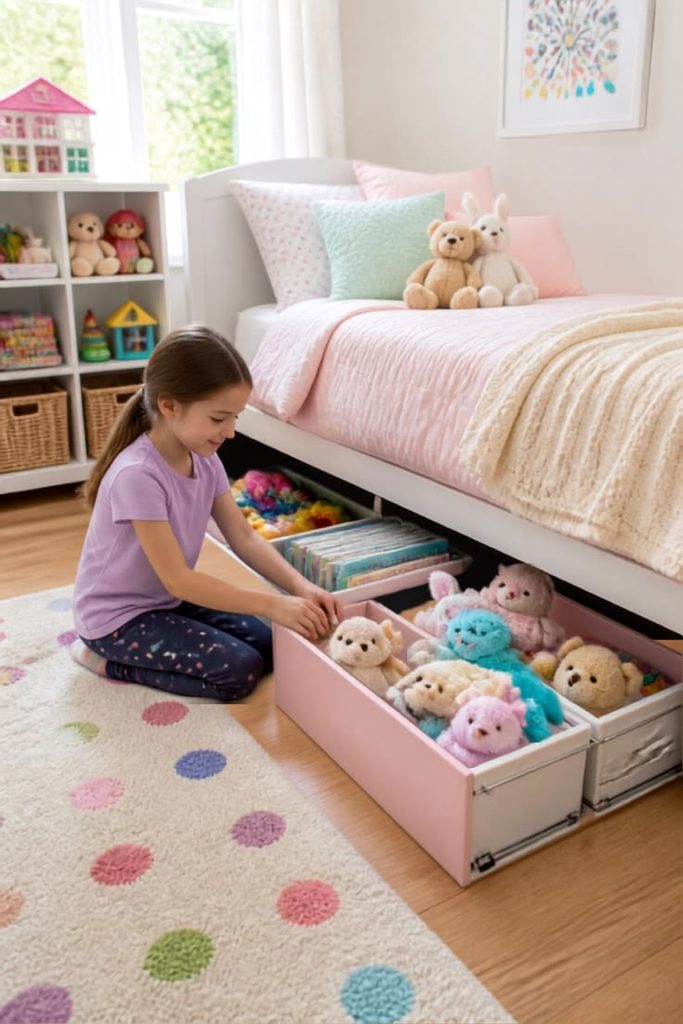
The area beneath the bed is one of the most overlooked storage spaces in a small bedroom. Flat, wheeled bins slide in and out easily, holding off-season clothes or spare bedding out of sight.
Bed risers can lift the frame a few extra inches, creating more room underneath for storage.
Measure the gap carefully first, since many frames leave only a narrow space for shallow containers. Label each bin clearly, so your child knows what is stored there without needing to ask you.
Choose lightweight bins, since your child should be able to pull them out alone when needed.
A bed with built-in drawers in the base skips the need for separate under-bed containers entirely. Avoid storing food, damp items, or anything heavy that could be hard for a child to lift.
Vacuum under the bed regularly, since dust gathers quickly in an area that is rarely disturbed.
This single space, often ignored, can replace an entire dresser drawer in many small bedrooms. Using it well is one of the fastest ways to add storage without spending very much money.
Improve the Lighting to Add Depth
Good lighting can make a small room feel larger by removing shadows and dark, cramped corners. Layer the lighting with a ceiling fixture, a desk lamp, and a soft lamp near the bed.
A single overhead bulb often leaves the corners dim, which can make the whole room feel smaller.
Wall-mounted lights and clip lamps save surface space compared to bulky table lamps on a shelf. Choose warm bulbs for the evening and cooler, brighter ones for the desk during study time.
Keep window treatments light, since blocking natural daylight makes a small room feel darker and more closed in.
If privacy is needed, choose sheer curtains paired with a blackout blind that rolls away during the day. Add a nightlight for younger children, and remove it once they no longer need it.
Battery-powered string lights can add a soft glow without needing an extra outlet on the wall.
Bright, layered lighting removes shadows that make corners feel smaller and less inviting to use. A well-lit room always feels more open, cheerful, and comfortable than a dim, shadowy one.
Even one extra lamp in the right spot can noticeably lift the mood of the room.

Fit In a Functional Study Space
Even a tiny bedroom can hold a proper spot for homework with the right compact choices. A fold-down desk attached to the wall provides a work surface that disappears when not in use.
A narrow shelf under the window can double as a slim desk for younger children.
For more detailed guidance, read How to Create a Kids’ Study Space That Encourages Better Focus. Choose a chair that slides fully under the desk, so it never blocks the walking path.
Keep supplies in a small caddy or a drawer, rather than spreading them across the desk surface. A clip-on lamp saves space compared to a bulky desk lamp with a wide, heavy base.
Mount a small corkboard above the desk for reminders, rather than using floor or shelf space for papers.
A rolling cart can hold books and supplies, then tuck under the desk once homework is finished. Even a modest study corner helps a child settle into steady, focused study habits early on.
Good planning proves that small rooms can still support real schoolwork and creative projects comfortably.
Add a Reading Nook Without Using Much Space
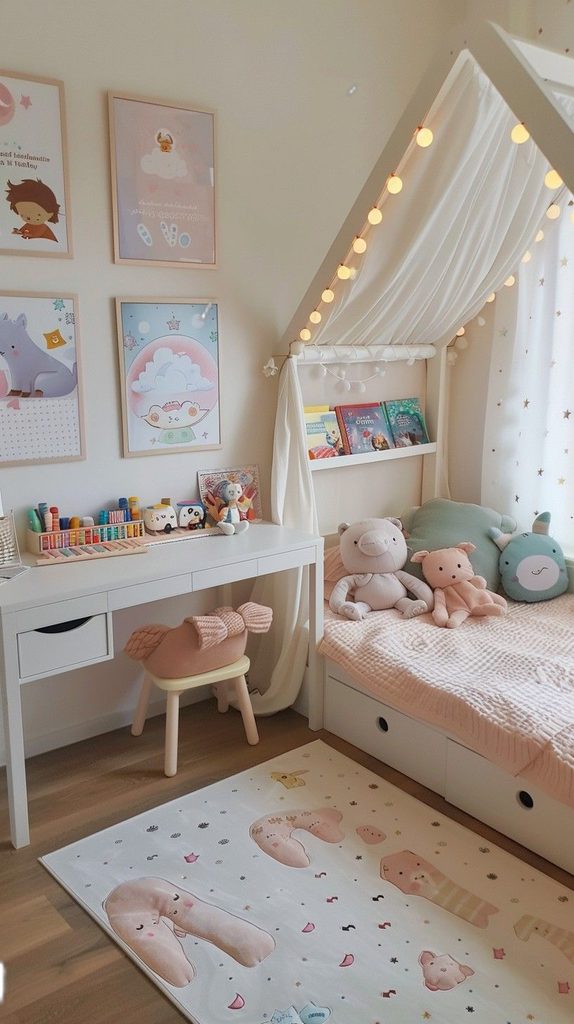
A reading nook does not need its own room, only a small, cozy corner of the existing one. A floor cushion, a soft rug, and a low shelf are often all it takes.
Wall-mounted picture ledges display book covers without needing a bulky, freestanding bookcase in the room.
For a complete guide, see How to Create a Reading Corner Your Child Will Actually Want to Use. A hanging chair or a simple hammock can turn an unused corner into a favorite spot.
Keep a small basket of current favorite books nearby, and rotate them along with the rest of the toys. A warm lamp nearby protects young eyes and adds a cozy glow to the corner.
Choose a spot away from the main play area, so your child links it with calm, quiet time.
Even a windowsill with a cushion can double as a tiny reading bench in a snug room. A well-placed nook proves that comfort and calm do not require very much extra space.

Plan for a Shared Small Room
Two children in one small bedroom face extra challenges, but smart design still makes it workable. Bunk beds or loft beds save the most floor space, since they stack the sleeping area. Give each child a defined zone, even if it is only marked by a rug or a shelf.
For a complete plan on sharing well, read What Every Parent Should Know Before Designing a Shared Kids’ Bedroom. A tall bookcase or a curtain can divide the room softly without needing a permanent wall.
Color-coded bins help each child know which storage belongs to them, reducing daily arguments over space. Keep shared items, like books and board games, in one central area both children can reach.
A fold-away table lets siblings share a study or craft space without needing two separate desks.
Small shared rooms work best when the rules and the zones are clear from the very beginning. With a thoughtful layout, two children can share a small room without feeling cramped or crowded.
Regular check-ins with both children keep the shared space fair as their needs keep changing.

Add Final Touches That Make the Room Feel Complete
Once the big pieces are in place, small details can pull the whole room together nicely. A patterned rug can anchor the space and hide the joins between different types of flooring.
Curtains that match the wall color help the window blend smoothly into the rest of the room.
A few framed pictures or a gallery wall add personality without taking up any floor space at all. Keep decor light near the ceiling, since heavy, dark trim can make the room feel lower and tighter.
Houseplants, real or artificial, add life and softness without crowding the usable floor space at all.
A large piece of art placed centrally can draw the eye and make a wall feel taller. For overall style ideas, see The Complete Guide to Creating a Fun but Functional Kids’ Room.
Let your child choose one or two personal touches, since ownership makes the room feel truly theirs.
Small, careful details finish the room and make it feel complete, not just efficient and practical. These final touches are often what a child remembers most fondly about their own bedroom.

Putting Everything Together
A small kids’ bedroom can feel bigger and work harder with the right layout, colors, and furniture choices. Start with careful measurements, choose a bed that fits the space, and keep colors light throughout the room.
Move storage onto the walls, pick multi-purpose furniture, and make full use of the closet and under-bed space.
Flexible zones let one small room handle sleep, play, study, and reading without feeling overcrowded or cramped. Keep the space edited, choose scale-appropriate furniture, and layer the lighting to remove dark, heavy shadows.
These steps work well in a solo bedroom, and they also work well in one shared with a sibling.
A kid needs a bigger bedroom to feel comfortable, but smart design can deliver that feeling in a small space. Every idea here costs very little, and most take only a single weekend to finish.
Start with one change this week, like clearing the floor or adding a wall shelf. Small, steady improvements will turn a cramped room into one that feels open, calm, and truly functional.
Your child will notice the difference quickly, even before every planned change is fully finished.

